We Didn’t Expect to Love Hanoi: Here’s What Changed Our Minds.

We nearly gave Hanoi two days and moved on to explore more of Vietnam. That’s what a lot of people do. Use it as the arrival point, see a bit of the Old Quarter, tick the Ha Long Bay day trip, and head south.
In the end we stayed a week. And are already planning to go back for more.
We’re not big city people. We never have been. Give us a smaller town, a slower pace, streets you can actually cross without negotiating with a wall of motorbikes.
Big capital cities tend to exhaust us rather than energise us. Hanoi shouldn’t have worked for us, but here’s why it did, and why we think it deserves a lot more than the stopover treatment it often gets.
First Impressions: A Big City That Doesn’t Feel Like One
The thing about most big cities is that they feel overwhelming. You know the feeling: concrete and glass as far as you can see, nothing at eye level worth stopping for, and everything is just grey regardless of the weather.
Hanoi doesn’t look like that.
There are no skyscrapers blocking the sky. The streets have colour: the ochre and faded green of French colonial buildings, the shopfronts stacked floor to ceiling with goods, the swarm of motorbikes that somehow flows like a river.
It’s busy, genuinely busy, but it’s real life happening around you rather than the anonymous rush of a financial district.
Pauline has always been slightly less bothered by crowds and big-city energy than I am, so she took it in stride from the first hour. But even she remarked on how human-scaled it felt for a city of eight million people.
We stood on a street corner watching the city go about its business and both had the same thought: this feels different than we expected. More like a big country town than a capital city.

That feeling didn’t go away as the week progressed.
How We Actually Spent Our Time in Hanoi
The Old Quarter
The Old Quarter is where most visitors spend the bulk of their time, and there’s a good reason for that. The tangle of narrow streets, each one heavily associated with a particular trade, is atmospheric in a way that photographs don’t quite capture.
The real joy you find in this area comes from slow walking and no agenda. You turn a corner and find a workshop that’s been making the same thing for generations. You stop at a plastic stool on the footpath for something to eat and end up staying longer than planned.
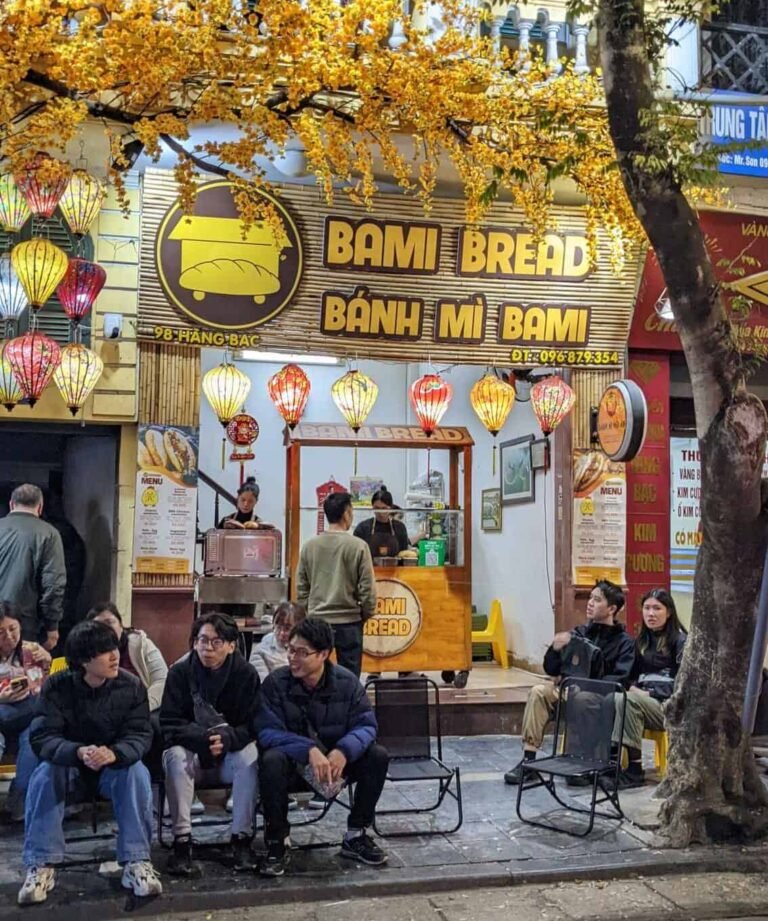
A quick side note about the plastic stools at sidewalk food and coffee places: it seems they are competing for which place can encourage patrons to sit in the smallest, lowest seat. My tip… strengthen your knees before you arrive because there will be plenty of deep squats coming.
It can feel overwhelming in the middle of the day when the foot traffic peaks. Our approach was to be out early, head back to the hotel or find somewhere to chill in the early afternoon, and get going again in the evening when the light changes and the pace shifts. That rhythm worked well for us.
Hoan Kiem Lake and the French Quarter
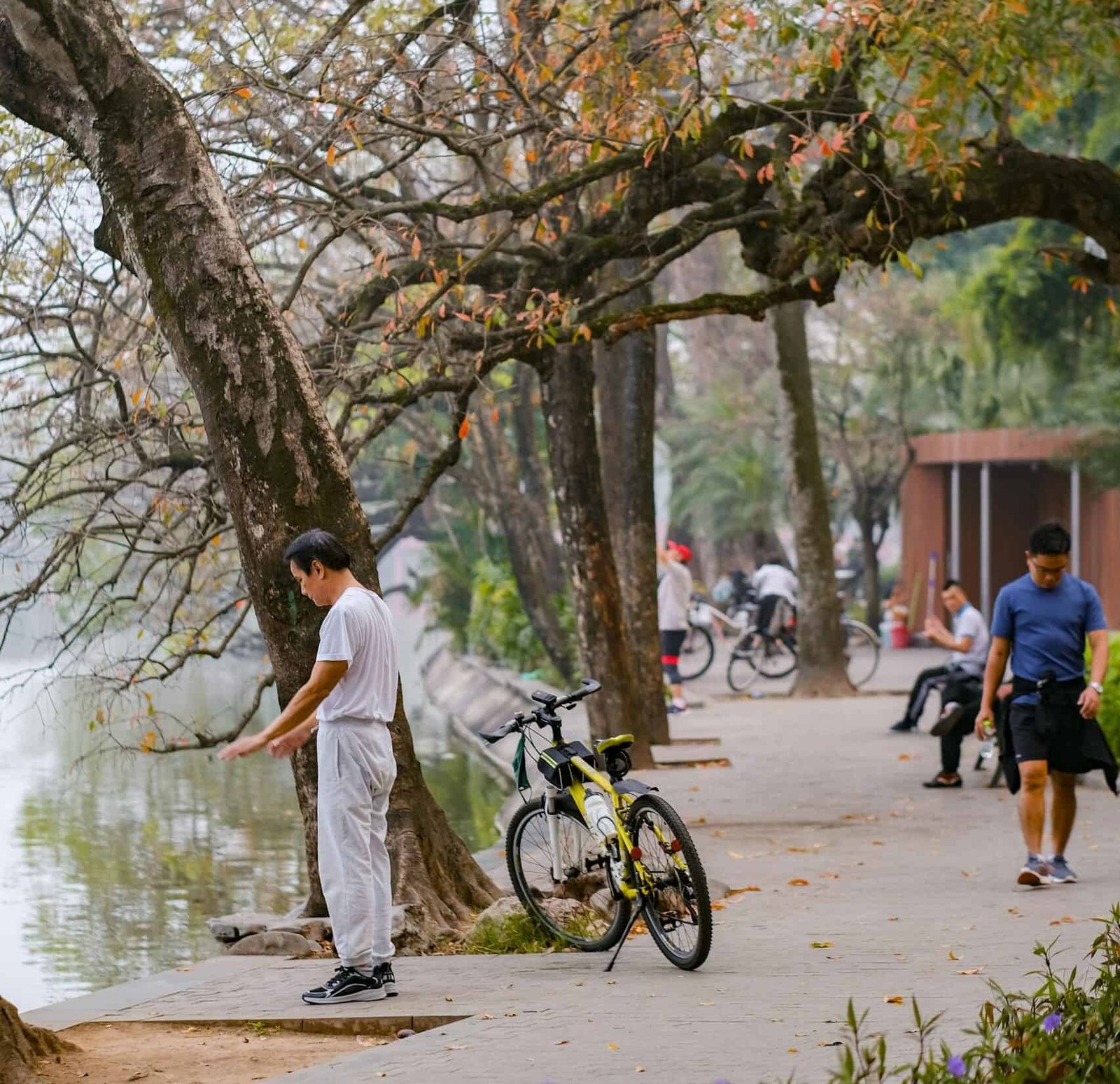
Hoan Kiem Lake sits just south of the Old Quarter and offers a genuinely different pace. It’s greener and quieter, and the lakeside walk in the morning, when locals are out doing tai chi and exercising before the heat of the day arrives, is one of those low-key experiences that sticks with you.
The Ngoc Son Temple on its small island in the middle of the lake is worth the modest entry fee. It’s a peaceful oasis in the centre of a bustling city.

The French Quarter, a short walk away, has wider streets with more formal architecture and a slightly more composed feeling than the controlled chaos of the Old Quarter.
We explored the area a little. A good afternoon walk, a coffee stop, a slower hour or two before heading back into the thick of things. But the soul of Hanoi is definitely in the Old Quarter.
The Food (Start Here, Seriously)
We have a preferred way to get things going in any new city or country: start with a food tour or walking tour. Hand yourself over to someone who actually lives there, let them show you the lay of the land, and reset whatever assumptions you arrived with before you start making your own moves.
In Hanoi, that decision paid off more than almost anywhere we’ve been.
We knew about Phở. And banh mi is my favourite sandwich in the world. What we didn’t fully grasp was how far the food culture ran beyond those two things.
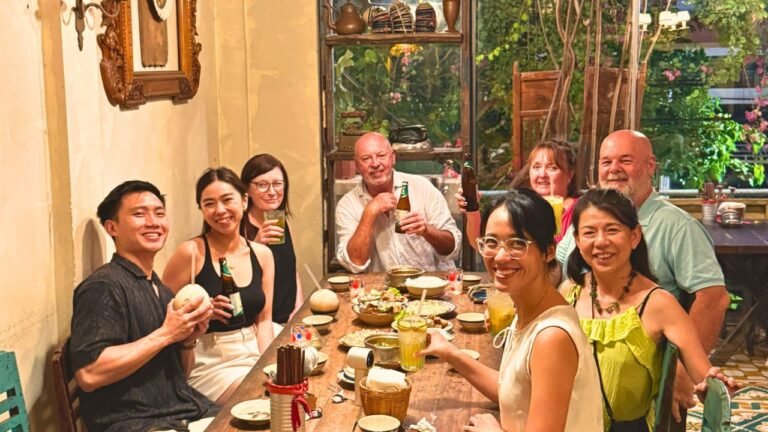
Eating alongside a local foodie that first evening, trying dish after dish, hearing the stories behind each one, Pauline and I kept exchanging the same look: we had no idea we would enjoy Vietnamese food so much.
Bun cha, Banh cuon, Banh Xeo, Cha ca, even Egg coffee. By the end of the evening we had a working list of things we needed to track down again before we left, and a completely different picture of what Vietnamese food actually is.
That first tour shaped the rest of our time in Hanoi more than anything else we did. If you do one thing on your first evening, make it this.
The Sights Worth Your Time
The Temple of Literature is genuinely worth two or three hours of your time. It’s one of the best-preserved examples of traditional Vietnamese architecture in the country, it’s relatively calm compared to the Old Quarter, and it gives you some useful historical context for the city. Go in the morning before the tour groups arrive.
Hoa Lo Prison, known to Americans as the Hanoi Hilton, is sobering and interesting in equal measure. It’s not a comfortable visit but it’s a thoughtful one, and it offers a very different perspective on twentieth century history than most Western accounts provide. Worth it.
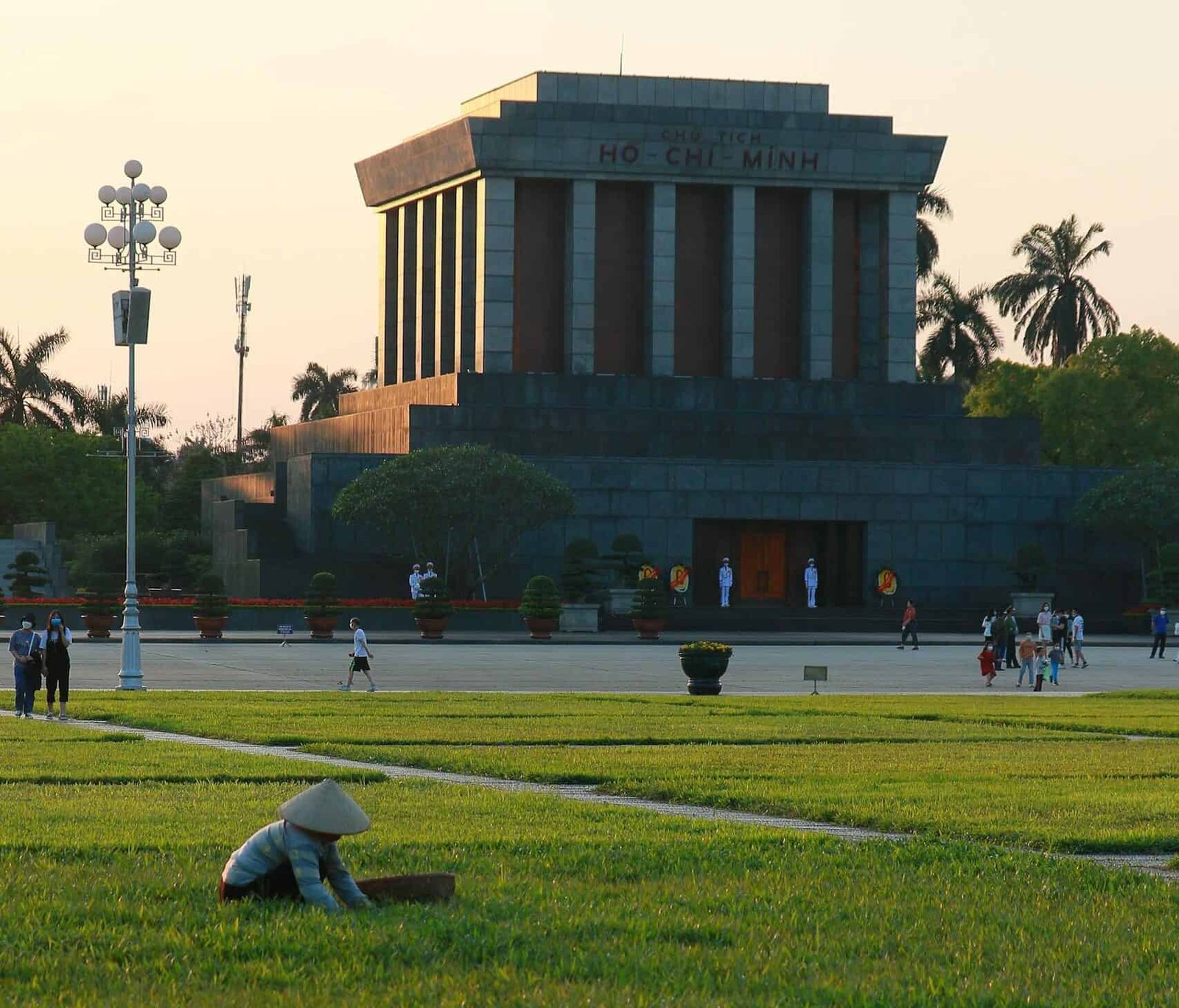
The Ho Chi Minh Mausoleum complex is large and worth a walk around for the architecture and the sense of scale. Entry to the mausoleum itself involves queuing and specific dress requirements; check opening hours before you go as it closes for several months each year.
A Few Honest Caveats
Dong Xuan Market appears high on most “must-see” lists. We’d gently push back on that. It’s a large covered market, primarily wholesale, and doesn’t have a great deal to offer the visitor who isn’t buying in bulk. Worth a brief look if you’re already in the area, but we wouldn’t make a special trip.
You can find all of the clothes and souvenirs you could possibly want on just about any street in the Old Quarter, and if you prefer a market vibe with everything in one place, check out the walking street market every weekend.
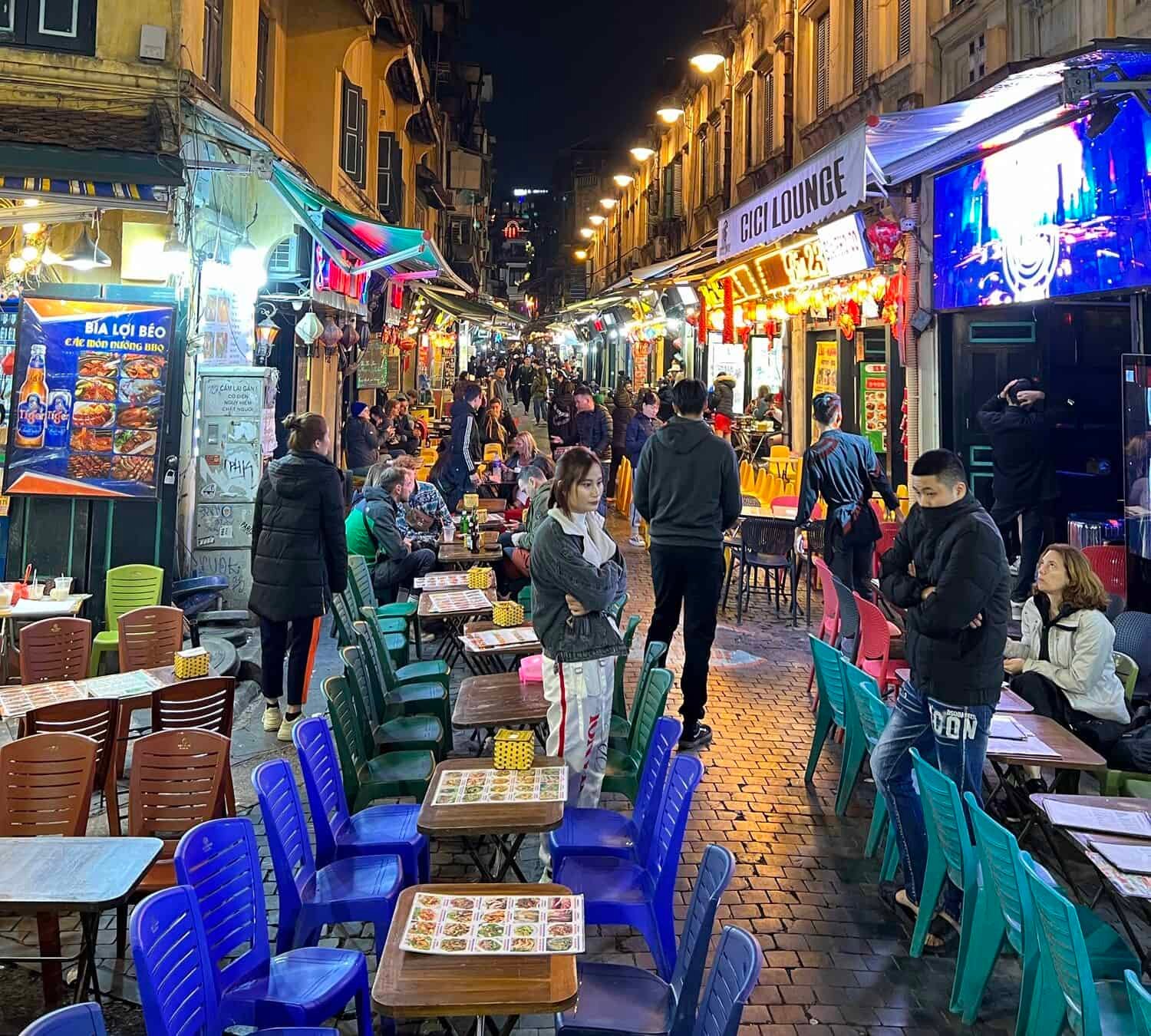
Bia Hoi, or Beer Street, is worth experiencing for the atmosphere, which in the early evening is genuinely alive and fun. We’ll be straight with you though: the cigarette smoke bothered us after a while and we didn’t stay as long as we’d planned.
If you don’t like people smoking around you, go early, or accept it as a trade-off for the experience of having some cheap beers and food in one of Hanoi’s tourist hotspots.

And speaking of tourist hotspots, you may think that the famous Train is just one of those places travel influencers love to tick off their lists. Actually, it is exactly that, but the experience of being there and sitting so close to a massive train zipping by is still well worth the tourist trap aspect.
The section of track called Train Street is actually gated and guarded at each end. Officially it is to control the flow of pedestrians but in reality it is more likely to help the local economy.
To gain access to the gated area you must be invited by one of the cafe owners and purchase something from their menu. That being said, it’s not expensive and you will probably want a drink while you wait anyway.
And the final touristy thing I will mention is something we didn’t try for ourselves, but constantly saw tour groups streaming past us. I’m talking about riding on one of the cyclos.

It’s something we will almost certainly do if we return to Hanoi, purely because it looks like a bit of fun to actually join the flow of the crazy traffic on something slightly safer than a scooter.
What Surprised Us
Two things, and both are worth pointing out.
The first was the weather. We arrived expecting comfortable temperatures, about 20 to 22 celcius, t-shirt weather back home. We stepped off the plane into several unseasonably cold and damp days we were completely unprepared for.
We were out buying jackets the first morning. Not a disaster, but a useful reminder: even careful pre-trip research doesn’t always protect you from what the week actually has in store. Don’t overpack, but build in a little flexibility beyond the obvious.
The second was the variety and quality of the food, and we’ve mentioned this already but it deserves a second note because the surprise was genuine. We considered ourselves reasonably well-informed about Vietnamese cuisine before we arrived.
We weren’t, not really. Hanoi changed that completely, and it happened within the first few hours of being there. That kind of rapid change is one of the things we travel for, and Hanoi delivered it faster than most places.
Klook.comThe Practical Stuff
How Long to Spend in Hanoi
Four to five days is our recommendation for a first visit. It gives you enough time to get a feel for the different neighbourhoods, do your food exploring properly, visit the main sights without rushing, and take a breath between things.
Anything less than three days and you probably won’t get to experience the real charm of the city. A week, as we did, is comfortable and gives you room to slow down and repeat the things you liked.
During that week we also slipped away for one night to cruise Halong bay. Being able to keep your luggage at the hotel and only bring along a backpack was very convenient.
When to Go
The most comfortable times to visit Hanoi are spring, roughly March to April, and autumn, September to November. The weather is mild, the humidity is manageable, and you’re outside the extremes of the summer heat and the northern winter cold.
As we mentioned above, we arrived to much colder weather than expected. Especially nowadays when unusual weather is becoming the norm, use the climate research as a guide, don’t base your entire plan on the forecast being 100% correct.
Getting Around
The most important thing to understand about Hanoi traffic before you arrive is that crossing the road works differently here. The motorbike flow is constant and it doesn’t stop for pedestrians.
The technique is to step out slowly and steadily, maintain your pace, and let the traffic flow around you. It sounds alarming before you do it, but for most people, it becomes second nature within a day or two.
Although for some people it never feels comfortable. We’ve now spent over 2 months in different parts of Vietnam, and Pauline still refuses to even consider trying to cross a road alone.
Grab, the Southeast Asian equivalent of Uber, works well across Hanoi and is the easiest way to cover larger distances without negotiating fares. Have it downloaded and set up before you land. Having a local SIM, or an e-SIM with an international data plan is genuinely useful here, not just a nice-to-have.
Walking is how you’ll want to spend most of your time in the Old Quarter. The streets are narrow and the footpaths are often occupied by parked motorbikes, so factor that into how you think about distances.
Our food tour guide explained the “footpath” usage to us on our first night, and this may be helpful for when you visit.
Don’t expect to do too much walking on sidewalks! The section closest to the shopfront is usually filled with merchandise for sale or tables and chairs for eating and drinking on. The next section is almost always filled with parked motorbikes.
The edge of the street is the generally accepted place you are expected to walk. And with the traffic flowing, it can be a bit exciting at times.
It’s not just the Old Quarter that is best explored on foot, the whole city is very flat and most of the places you will want to see are within walking distance if you are the kind of traveller who likes to find hidden gems.
Where to Stay
The Old Quarter puts you in the middle of everything, which we enjoyed. If you’d prefer slightly more breathing room and a pleasant place to start your mornings, the area around Hoan Kiem Lake is a good alternative: still central, noticeably calmer.
We’d suggest leaning toward a smaller locally-owned guesthouse or boutique hotel over a large international property. They tend to be better value, more interesting, and better placed for where you actually want to be. Read recent reviews carefully and pay attention to what people say about noise; some Old Quarter streets are lively well into the night.
What to Budget
Hanoi is very good value. Street food meals cost almost nothing. A full sit-down dinner at a solid local restaurant will be a fraction of what you’d pay at home. Attractions are inexpensive by any standard.
The local currency is the Vietnamese Dong (VND). ATMs are widely available, but we’d recommend trying an exchange bureau for cash. We were offered a noticeably better rate in Hanoi than we got in Australia before we left.
One important detail: exchange bureaus will only accept banknotes in pristine condition. No rips, no creases, no marks. Check your money before you travel.
Accommodation is where you have the most control over your spend. Budget options are plentiful; a comfortable mid-range room with air conditioning in a well-located guesthouse won’t stretch your finances.
If you’re flying into Hanoi, check whether an “open jaw” fare with an exit from Ho Chi Minh City or Da Nang makes sense for your itinerary. Flying into one end of the country and out the other is often more efficient and not necessarily more expensive.
A Few Other Practicalities
On safety: Hanoi has a low rate of serious crime involving tourists. The usual awareness applies, particularly around petty theft and scams in busy areas, but we never felt unsafe. We’ve written a dedicated post on Hanoi safety if you want more detail on that specifically.
On food: if you want a proper overview of what to eat before you go, our guide to the best dishes to try in Vietnam covers the full picture. The short version for Hanoi specifically: pho, bun cha, banh cuon, cha ca, banh mi, egg coffee, and nem ran are all worth tracking down. Start with the food tour and let that guide the rest.
On health: standard travel vaccinations for Vietnam typically include Hepatitis A, Hepatitis B, Typhoid, and Tetanus. Consult your doctor well before you travel for advice specific to your own health history. Tap water in Hanoi is not safe to drink; use bottled or filtered water throughout your stay.
On etiquette: remove your shoes before entering temples or someone’s home, dress modestly at religious sites, and use both hands when giving or receiving items. A few words of Vietnamese will be genuinely appreciated, even if the response comes back in English. English is widely spoken in tourist areas, hotels, and restaurants.
Is Hanoi Right for You After 50?
It’s a strong yes if: you like food as a reason to explore, you’re comfortable with a degree of sensory intensity, you prefer texture and authenticity over polish and convenience, and you’re willing to move at a pace that lets a place reveal itself.
Think carefully if: sensory overload is a genuine issue for you. The Old Quarter is chaotic in the best possible sense, but there’s no switching it off. If you need quiet and calm as a baseline rather than as something you occasionally find, Hanoi will be hard work.
Also worth considering if mobility is a factor: the footpaths are uneven, often partially obstructed, and the crossing situation requires some confidence on your feet. None of it is impossible, but it’s worth going in with the right expectations.
Would We Go Back?
Yes, and without any hesitation.
We feel like we gave Hanoi a proper look on this trip, but we’ve also come to think about it differently: less as a destination to tick off and more as a base.
Hanoi sits in a part of the world with a lot of easily accessible options around it. Domestic flights within Vietnam are well-priced and frequent. The broader region is within easy reach with several low-cost airlines offering flights.
We could see ourselves returning to Hanoi not only to find new sights, but to use it as the place we come back to between other trips. A comfortable, characterful, well-priced city that doesn’t demand all your attention for itself.
That’s a version of travel we’re increasingly interested in for our retirement years.
Pauline’s verdict is simple: more time, and more food, and definitely more coffee. She’d like more time to look further behind the tourist curtain.
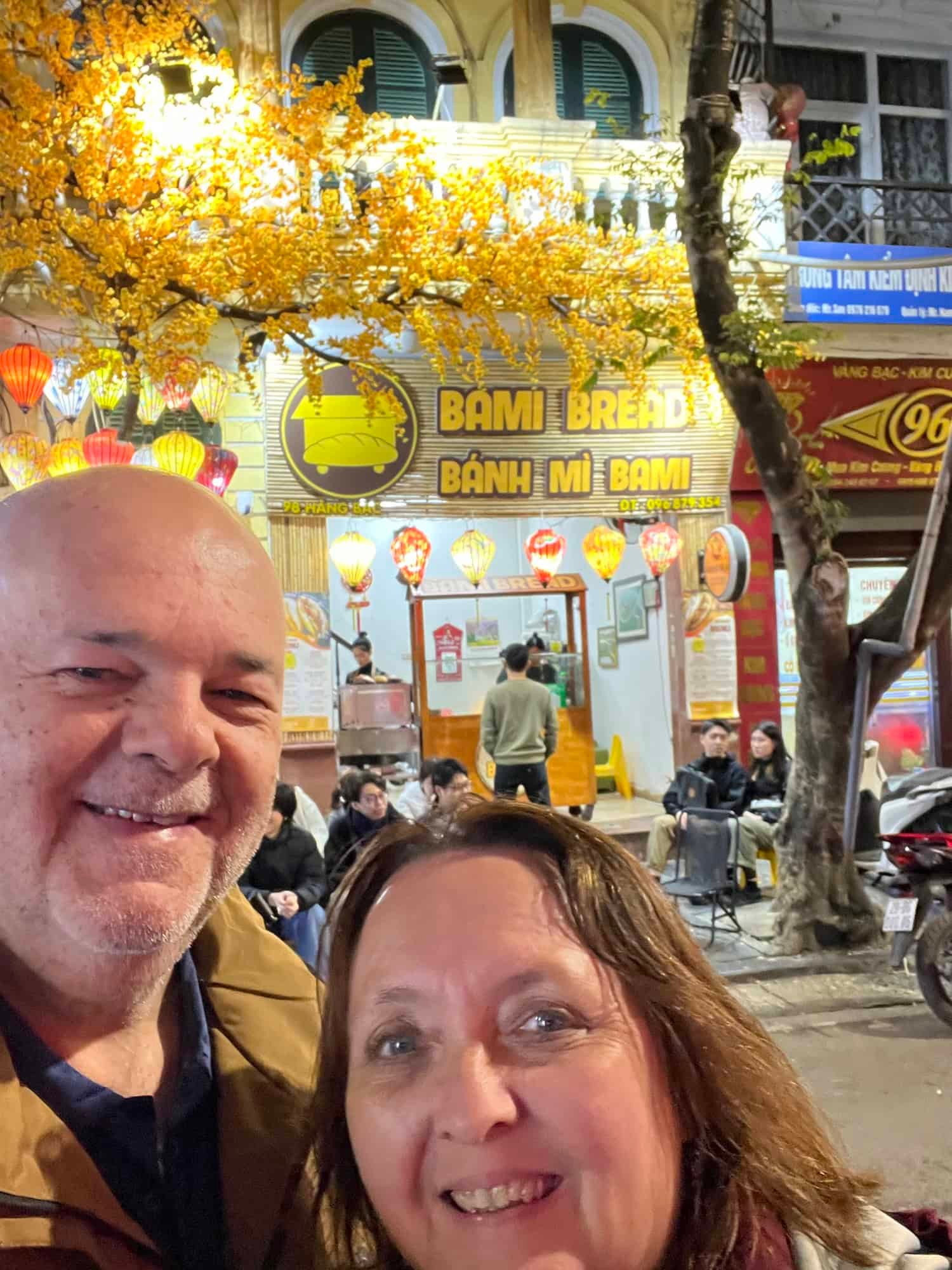
What Hanoi Taught Us
Hanoi reminded us that the rules we travel by are mostly useful but not always right.
We have a genuine bias against big cities. It’s earned, based on years of experience of places that confirmed it. But a bias is still a bias, and it deserves to be tested occasionally rather than just taken as a definite.
Hanoi tested our preconceptions and came out looking better than when we went in.
It also reinforced something we keep returning to, no matter where we travel: the single best thing you can do on the first day in a new place is hand yourself over to someone who knows it well.
A food tour, a walking tour, a local guide. It costs a little, takes a few hours, and sets up the rest of your trip in ways that no amount of research at home quite replicates.
We arrived in Hanoi not entirely sure it was going to work for us.
We left already planning to come back. Not as a standalone slow travel destination, but as one of the most interesting places we have found to use as a base for regional short trips.