Is Hoi An Worth Visiting? An Honest Guide After Two Visits

Hoi An is one of those places that has you arriving with high expectations.
You have probably already seen the photographs. Mustard-yellow buildings, colourful lanterns hanging above narrow streets, wooden boats floating along the river and bowls of food that cost very little but remain in your memory for years.
You may also have heard that Hoi An is crowded, overly touristy and no longer the peaceful trading town shown in those photographs. Both versions are true.
We have now visited Hoi An twice. On our first trip, we spent four nights seeing as much as we could. We explored the Ancient Town, visited My Son Sanctuary, joined a cooking class and ate extremely well. We loved Hoi An and left wanting more.
When we returned two years later, we gave ourselves two weeks.
That second visit showed us a different side of the town. We still wandered through the Ancient Town and ate far more bánh mì than medical science would probably recommend.
But we also found interesting coffee shops, explored the backstreets, made the most of the hotel pool in the afternoons and had entire days without much of a plan.
Our first visit showed us why people come to Hoi An. Our second showed us why some people stay.
So, is Hoi An worth visiting? Yes, absolutely. But when you visit, where you stay and how quickly you try to experience it can make an enormous difference.
Where is Hoi An?
Hoi An is in central Vietnam, around 30 kilometres south of Da Nang. The historic centre sits beside the Thu Bon River, with rice fields, small villages and the coast surrounding the town.

There is no airport or railway station in Hoi An. Most travellers arrive through Da Nang, which has both an international airport and a station on Vietnam’s main north-south railway line.
This makes Hoi An easy to include in a longer Vietnam trip. It also works well as a destination in its own right, especially when combined with Da Nang or the former imperial capital of Hue.
Is Hoi An worth visiting?
The simple answer is yes.
Hoi An combines several things that are difficult to find in one compact destination. It has a beautiful historic centre, distinctive local food, a riverside setting, nearby beaches and countryside that can be reached without spending half the day in transit.
It is also mostly flat, easy to explore and very affordable by Western standards. For travellers over 50, it offers a particularly appealing mix of culture, comfort and slower days without requiring you to give up interesting things to do.
There is a qualification, though. Hoi An is no longer an undiscovered town, and the Ancient Town can become extremely busy from late morning into the evening. Tour groups fill the main streets, lantern boats crowd the river and the quieter atmosphere can disappear beneath a great deal of enthusiastic tourism.
If you only experience Hoi An at its busiest, you may wonder what all the fuss is about.
Visit early in the morning, wander beyond the busiest streets or stay long enough to stop treating every day as a sightseeing mission, and Hoi An becomes a different place.
How many days do I need in Hoi An?
Four days is enough to see Hoi An’s main attractions, try the local food and take one trip beyond town. That is roughly what we did on our first visit, and we came away feeling that we had experienced a great deal.
We had also been busy almost the entire time.
If your itinerary allows it, five to seven days gives you a better balance. You can explore the Ancient Town, visit My Son Sanctuary, spend time at the beach, see some of the surrounding countryside and still have room for a morning when nothing happens beyond breakfast and another coffee.
Our second stay lasted two weeks. Before returning, we wondered whether that might be too long. Instead, Hoi An became the first place to make us seriously reconsider what a longer stay could look like in retirement.
We developed a simple routine. Morning walks, breakfast, coffee, backstreet wandering, perhaps a bánh mì for lunch, an afternoon swim and dinner beside the river. Some days included an excursion or a particular place we wanted to visit. Others barely qualified as an itinerary at all.
It never felt as though we were trying to fill time.
Four nights will let you see the highlights, but a longer visit creates a very different experience. We have now put together the two-week Hoi An trip we would plan for first-time visitors, including the complete cost for two people.
As a general guide:
- Three to four days: Enough for the Ancient Town, the major sights, local food and one excursion, but you will need to keep moving.
- Five to seven days: A better choice if you want to include the beach and countryside without rushing.
- Two weeks or longer: Well suited to travellers who enjoy café mornings, returning to favourite places, swimming, wandering and building some ordinary life into a trip.
You do not need two weeks to enjoy Hoi An. But this is one destination where staying longer can reveal more than simply another list of attractions.
The Hoi An most visitors almost miss
During our first visit, we did see Hoi An before the crowds arrived later in the day. The problem was that we were so busy getting started on our sightseeing that we barely appreciated it.
On our return, those quiet mornings became part of the experience rather than a head start on the itinerary.
Before the shops are fully open and the tour groups arrive, the Ancient Town feels more like a place where people live. Locals exercise beside the river, deliveries arrive, shutters open and the streets still have room to breathe.
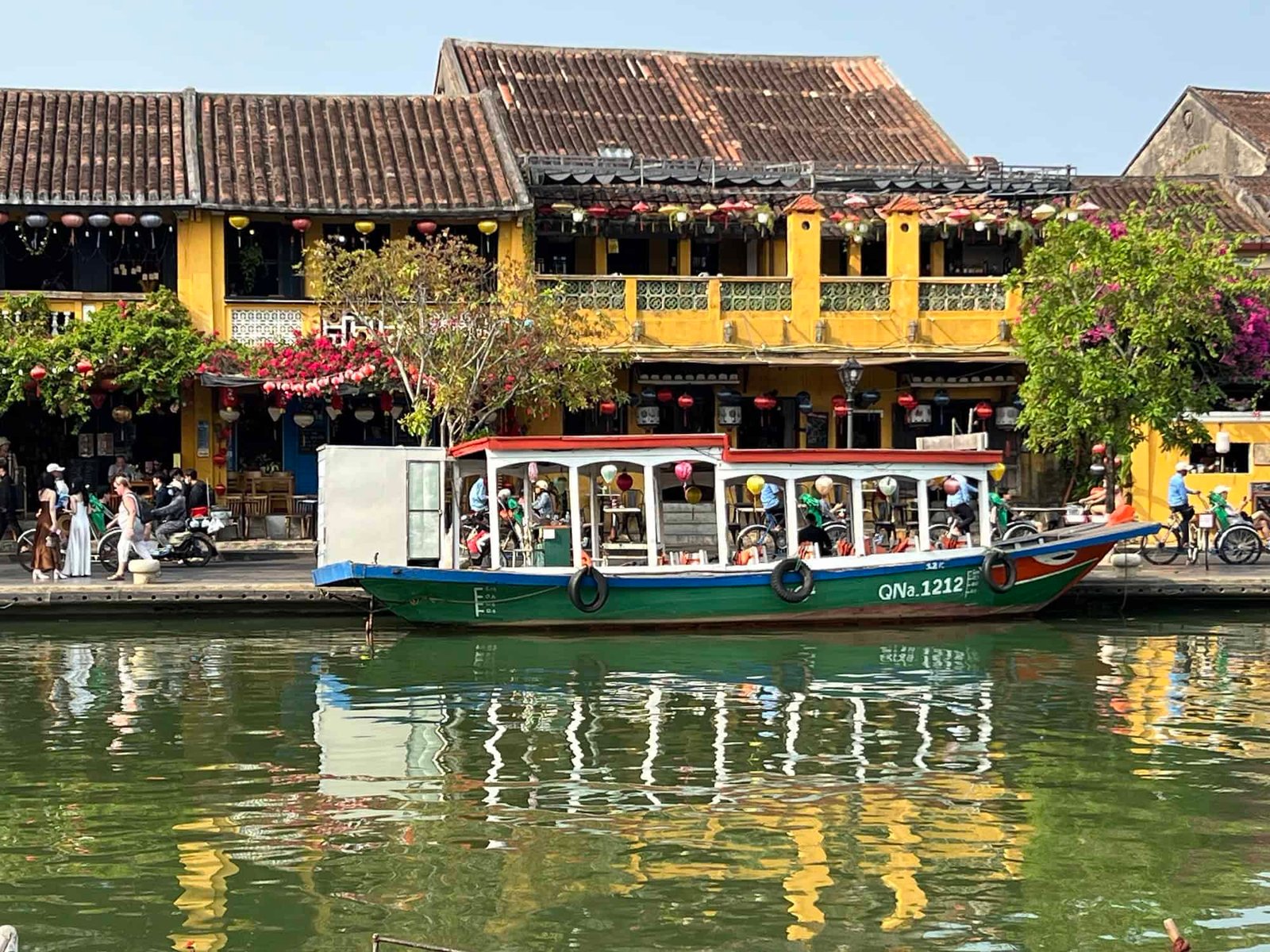
Later in the day, the same streets can feel completely different. The lanterns are glowing, boats fill the river and the town becomes colourful and theatrical. It is undeniably beautiful, but also busy and deliberately designed for visitors.
We think both versions are worth seeing. Just do not assume the hectic evening version is the whole story.
If crowds bother you, arrive in the Ancient Town early, explore the quieter streets away from the river and save the busiest central lanes for a short evening wander. Staying within walking distance also makes it much easier to visit when the town is at its best.
Best things to do in Hoi An
Hoi An has enough major attractions for a short visit, but its real strength is the variety of experiences close together. You can spend one day exploring centuries-old buildings, the next beside the sea and the following morning cycling through rice fields.
Explore Hoi An Ancient Town
The UNESCO-listed Ancient Town is the main reason most people visit Hoi An, and it deserves more than a quick lap between souvenir shops.
The architecture reflects the town’s history as an international trading port, with Vietnamese, Chinese, Japanese and European influences sitting side by side. Some buildings are still family homes, while others have become museums, assembly halls, shops and restaurants.
The Japanese Covered Bridge, the Old House of Tan Ky and the Fujian Assembly Hall are among the best-known sites, but the pleasure is not limited to individual landmarks. Much of Hoi An’s appeal comes from wandering slowly enough to notice tiled roofs, internal courtyards, faded walls and small lanes leading away from the main streets.
An Ancient Town ticket includes entry to a selection of historic buildings and cultural sites. Even if you prefer wandering to museums, visiting a few helps explain why Hoi An looks and feels different from other Vietnamese towns.
Our advice is simple: go early at least once. You can return after dark for the lanterns, but the quieter morning may be the version you remember most.
See Hoi An after dark
At night, Hoi An turns up the colour and the volume.
Lanterns glow above the streets, restaurants fill, vendors sell floating candles and small boats carry visitors along the river. It is touristy. It is also fun, atmospheric and unlike anywhere else we have visited.
You do not need to visit during the monthly Lantern Festival to experience it. The riverside puts on a smaller version every night.
The main streets and bridge can become tightly packed, particularly on weekends and during Vietnamese holidays. Arrive before sunset if you want to watch the town change without immediately joining the human traffic jam.
A short lantern boat ride is not an authentic journey into undiscovered Vietnam. It is a popular visitor experience involving colourful lights and a boat. Taken on those terms, we enjoyed it.
Visit the Japanese Covered Bridge
The Japanese Covered Bridge is Hoi An’s most recognisable landmark. Originally built by the Japanese community several centuries ago, it connects two parts of the old trading town and includes a small temple.
It will not take long to see, and at busy times it may take longer to photograph than to cross. Visit early and combine it with a walk through the surrounding streets before the larger groups arrive.
Take a cooking class
Hoi An is one of Vietnam’s best places to learn about local food rather than merely order it.
On our first visit, we joined a cooking experience combined with a trip in one of the area’s round basket boats. It was fun, social and gave us a useful introduction to several Vietnamese dishes.
But our favourite food experience came almost by accident. After an exceptional dinner at Claypot Restaurant, we arranged a private cooking class there the following morning. It became one of the strongest memories from our first visit.
Cooking classes range from polished group tours involving market visits and basket boats to smaller lessons organised directly with local restaurants. Decide whether you want a full-day experience or whether the cooking itself matters most.
Spend time at An Bang Beach
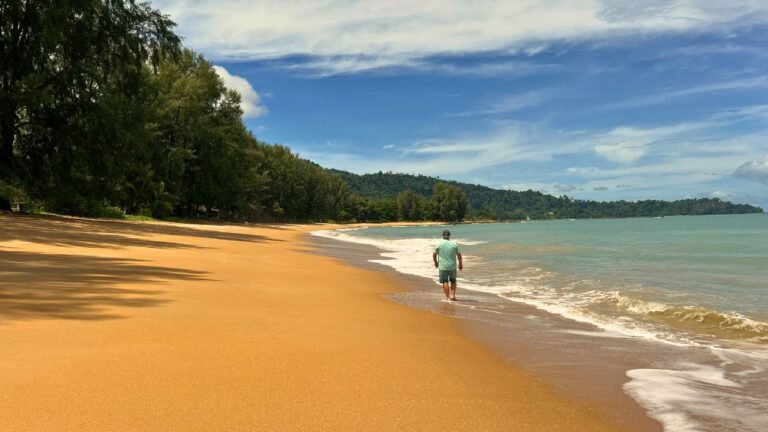
An Bang Beach is only a few kilometres from the Ancient Town and gives Hoi An something many historic destinations cannot offer: an easy change of scenery.
The beach is lined with restaurants, casual bars and places to hire a sun lounge. It can be busy around the main entrance, but walking farther along the sand usually finds a quieter stretch.
Swimming conditions depend on the season and weather. The sea is generally calmer during the drier months, while rougher conditions and erosion can affect parts of the coast during the wet season.
For a short visit, An Bang makes a good half-day break from sightseeing. During a longer stay, it gives you the option of an entirely different kind of day without changing hotels or organising a major excursion.
We used the bikes provided by our hotel and took an easy morning ride to the beach through the rice fields. It was a nice change of scenery from in the town, and we returned that evening to sample some of the fresh seafood.
The staff at two of those restaurants had been really nice to us during our morning visit, even though we told them we were not there to eat. So we spread our dinner between them.
We visited at a very quiet time of year, at one of the restaurants we were the only diners at the time, and at the second there was only two other couples. Right on the beach, fantastic food, friendly service, and prices just a fraction of what we would pay back home. What’s not to love?
Explore Hoi An’s countryside
You do not need to travel far from Hoi An to leave the busy town behind.
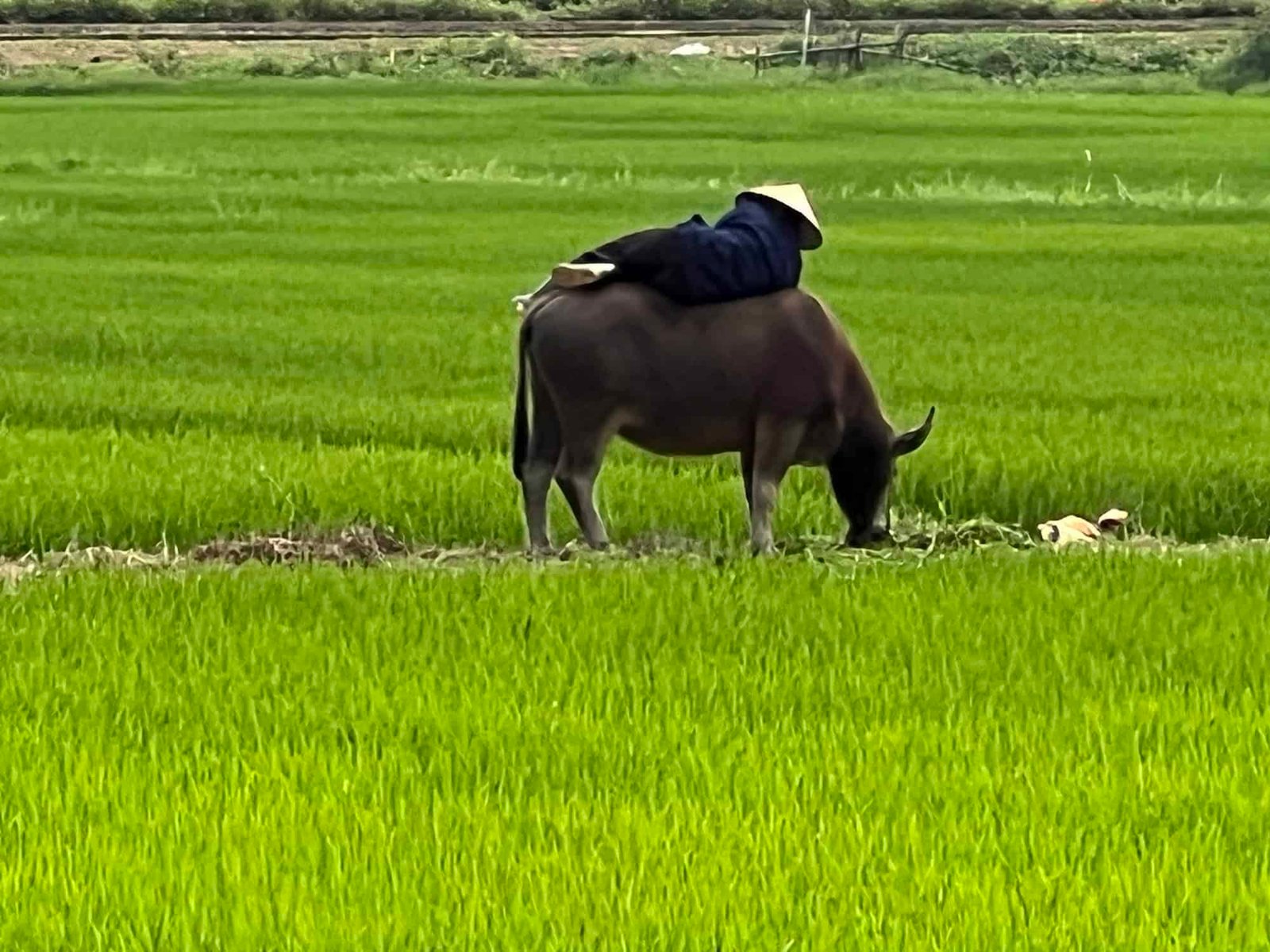
Rice fields, vegetable gardens, waterways and small villages surround the urban area. Cycling is popular because the land is mostly flat, although the heat can turn a gentle afternoon ride into an accidental fitness test.
Tra Que Vegetable Village is one of the easiest countryside destinations to reach. Cam Thanh is known for its coconut palms and basket boats, while quieter roads between town and the coast offer a less organised glimpse of local life.
This is where staying longer helped us. The countryside stopped being another attraction to fit into the schedule and became somewhere we could wander when we felt like seeing what was beyond the next row of buildings.
During our second visit we took the opportunity to change hotels for the final three nights, moving from deep in the old town, out to the rice fields. It may have been a short taxi ride between them but the vibe was worlds apart.
Visit My Son Sanctuary
My Son Sanctuary lies around 40 kilometres from Hoi An and contains the remains of Hindu temples built by the Champa civilisation.
The setting, surrounded by green hills, is beautiful. The damaged temples also tell a more complicated story involving centuries of religious importance, changing kingdoms and extensive destruction during the Vietnam War.
We found it one of the most worthwhile excursions from Hoi An. It adds historical depth to a trip that can otherwise become heavily focused on food, shopping and lanterns.
Go early if possible. The site becomes hotter and busier as the morning continues, and there is limited shade around some of the ruins.
Have clothes or shoes custom made in Hoi An
Hoi An is famous for tailor-made clothing and leather goods, with hundreds of shops offering everything from casual shirts to suits and formal dresses, sandals to dress shoes.
Quality and service vary. Do not choose solely on the lowest price or the enthusiasm of the first person who invites you inside. Read recent reviews, look at finished work and allow enough time for at least one fitting and adjustment.
If tailored clothing is important to you, arrange it early in your stay rather than on the final afternoon. A bargain suit is considerably less exciting when one sleeve is trying to retire before the other.
We went to Shoes Shop Thanh Sinh on a recommendation. Pauline was after some casual shoes and a pair of work shoes, while she made me get a pair of casual going out shoes.
The lady running the shop was professional and friendly, going through dozens of different colours and type of leather, and offering a seemingly endless catalogue of designs.
We ended up with 4 pairs of custom-made leather shoes for under $250 Aussie dollars, which is a steal. We went back after 24 hours for a test fitting, and then the following day, after the adjustments were done, they were delivered to our hotel.
Wander the backstreets and find your own coffee shop
This was one of the biggest differences between our two visits.
With four nights, a café break was something we never had time to squeeze into the agenda. With two weeks, coffee became part of how we experienced Hoi An.
We wandered beyond the main Ancient Town streets, found cafés we wanted to return to and began recognising the routes between them. Some were polished and designed for visitors. Others were simple neighbourhood places where the morning moved at a much gentler pace.
Vietnamese coffee can be strong, sweet and wonderfully varied. Hoi An also has a growing speciality coffee scene, so you can move from traditional cà phê sữa đá to carefully brewed local beans without travelling very far.
Pauline has become addicted to Vietnamese coffee, particularly iced coconut coffee. So during this second visit to Hoi An a daily coffee expedition became an important part of our routine.
I honestly can’t recall one that she didn’t rave about, except maybe the time she tried her first salted coffee. The intricate design on top almost made it too pretty to drink. Unfortunately, she didn’t enjoy the taste as much as the visuals.
What should you eat in Hoi An?
Hoi An is one of the best food destinations we have visited in Vietnam, which is not a sentence we offer lightly.
Its local dishes are distinctive, widely available and generally affordable enough that trying something new carries very little financial risk. If lunch turns out not to be your greatest decision, another lunch is rarely far away.
Cao lầu
Cao lầu is Hoi An’s signature dish. It combines thick, chewy noodles with sliced pork, fresh herbs, greens and crisp pieces of rice cracker. There is only a small amount of broth, so it sits somewhere between a noodle soup and a salad.
You will see it on menus throughout town. Try it more than once because the balance of meat, herbs, texture and sauce varies considerably between restaurants.
Bánh mì
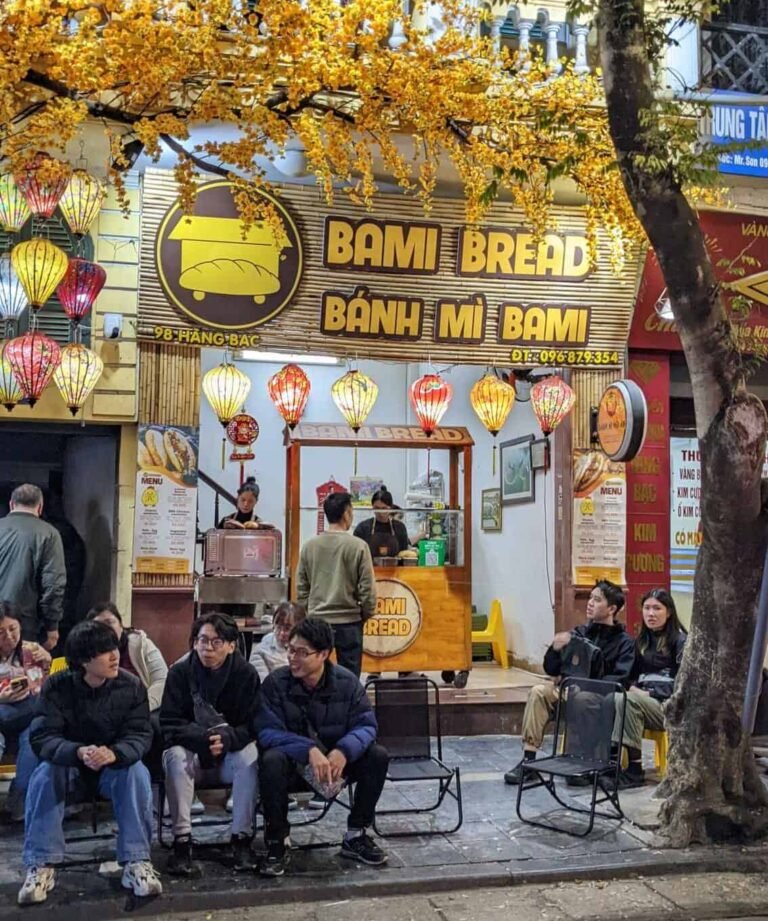
Hoi An has an extraordinary reputation for bánh mì, largely built around famous shops such as Bánh Mì Phượng and Madam Khanh, known as the Bánh Mì Queen.
On our second visit, we decided to test that reputation properly. This was important travel research, obviously, and not simply an excuse to eat repeated lunches in the name of content.
We tried the famous names and several less celebrated shops. The best-known bánh mì was not automatically our favourite. That search became a reminder of something we repeatedly discover while travelling: reputation can point you in the right direction, but your own taste still gets the final vote.
You can watch our review of some of the places we tried in this video:
Cơm gà
Hoi An chicken rice uses fragrant rice, shredded chicken, herbs, onions and a tangy dressing. It sounds simple, but a good version has layers of flavour and texture that make it far more interesting than the name suggests.
The version we ate at Claypot Restaurant helped turn an excellent dinner into one of our favourite meals from any trip.
White rose dumplings
These steamed dumplings are made from translucent rice dough, usually filled with shrimp or pork and topped with crisp shallots. Their folded shape gives them the name “white rose.”
They make a good dish to share alongside other Hoi An specialities rather than an entire meal on their own.
Mì Quảng
Mì Quảng is found throughout central Vietnam. It combines noodles, meat or seafood, herbs, peanuts and rice crackers with a small amount of richly flavoured broth.
It is filling, inexpensive and an excellent option when you have temporarily reached your bánh mì limit, assuming such a condition exists.
Is Hoi An affordable?
Hoi An remains an affordable destination for most international visitors, although the busiest parts of the Ancient Town charge noticeably more than neighbourhood restaurants and cafés a few streets away.
You can eat very cheaply at local restaurants and food stalls, but Hoi An also has enough polished restaurants, cocktail bars and boutique hotels to make spending money remarkably easy. It works for budget travellers, but it also suits people looking for comfort and good value rather than the absolute lowest price.
Accommodation ranges from family-run homestays to luxury resorts. The large number of properties helps keep prices competitive, particularly outside major Vietnamese holidays and the busiest months.
For us, the value was not simply that individual things were inexpensive. It was that we could build comfortable days around good food, coffee, walking and swimming without every decision feeling like another assault on the travel budget.
Where should you stay in Hoi An?
Where you stay will shape your experience more than the star rating beside the hotel’s name.
Near the Ancient Town
Stay close to the Ancient Town if this is your first visit, you only have a few days or you want to explore early in the morning and return easily after dark.
The most convenient properties sit just outside the protected historic area, where vehicles have better access but the main sights remain within walking distance.
This is the best choice for sightseeing, restaurants and atmosphere. The trade-off is more activity, traffic and potential evening noise.
Between Ancient Town and An Bang Beach
The neighbourhoods east of the centre provide a useful compromise. You can reach the Ancient Town by bicycle or a short taxi ride while remaining closer to rice fields and the beach.
This area works particularly well for longer stays because it gives you access to several different versions of Hoi An rather than placing every day in the busiest visitor zone.
Near An Bang Beach
An Bang suits travellers who want the beach to be part of their daily routine rather than an occasional excursion.
You will find small hotels, villas, homestays and restaurants within walking distance of the sand. Ancient Town is still easy to reach by taxi, but you lose the ability to wander there spontaneously whenever the mood strikes.
Where we stayed
During our first visit we stayed at the Kiman Boutique Hotel. Lovely staff, a huge room with a balcony overlooking the residential part of town, but its location on the road leading into the old town made it a very hot walk in the heat of the day.
This taught us that staying much closer to old town is a smart idea if you like walking around the prettiest parts of town. So this time we chose the Ancient Haven Boutique Hotel, and I would have to search long and hard to have found a better option.
As I mentioned above, we moved out to the rice fields for our final few nights to a very unique hotel called Reu. It gave us a very different experience to Ancient Haven, but at twice the price it wasn’t twice as good.
Suggested accommodation
I can’t speak highly enough about the Ancient Haven. Located right on the edge of Old Town and just one block back from the river, it is ideally located for anyone planning to explore the town on foot.
It is surrounded by some exceptional spas, a couple of our favourite coffee shops, some great restaurants, and one of our favourite banh mi places, Ty’s Bread.
The pool is always refreshing, the rooms are very spacious, the price is very low, and the staff are possibly the nicest we have ever experienced.
How do you get to Hoi An?
Flying into Da Nang
Da Nang International Airport is the easiest arrival point for most visitors. The drive to Hoi An generally takes around 45 minutes, depending on traffic and where you are staying.
Hotel transfers, private cars and taxis are readily available. A pre-arranged transfer is usually the simplest option after a flight, especially if you are carrying luggage or arriving at night.
Arriving by train
Hoi An does not have a railway station. The nearest station is in Da Nang, with services connecting it to Hue, Hanoi, Nha Trang and Ho Chi Minh City.
The rail journey between Hue and Da Nang is particularly scenic. From Da Nang station, continue to Hoi An by taxi, transfer or shuttle.
Arriving by bus
Hoi An is connected by tourist buses and vans to destinations throughout central Vietnam. Services and drop-off points vary, so check whether your ticket ends at your accommodation, a central office or somewhere that requires another taxi.
Long-distance sleeper buses are usually cheaper than flying, but journeys from Hanoi or Ho Chi Minh City consume most of a day and a fair portion of your enthusiasm. Unless the bus is part of the experience you want, flying or breaking the journey into several stops will suit many over-50 travellers better.
Getting around Hoi An
The Ancient Town is compact and best explored on foot. Much of the historic centre restricts motorised traffic during parts of the day, although bicycles, cyclos and the occasional vehicle with mysterious permission still appear.
Bicycles are useful for reaching nearby neighbourhoods and the countryside. Many hotels provide them free or rent them inexpensively.
Taxis and ride-hailing services are convenient for the beach, longer trips and days when the heat has won the argument. Private drivers are easy to arrange for My Son Sanctuary, Monkey Mountain, or a longer day trip.
Scooters are widely available, but traffic can be confronting if you are not experienced riding in Vietnam. It’s not like Hanoi or Ho Chi Minh, but it’s still not easy. Check your licence and insurance requirements carefully before hiring one.
When is the best time to visit Hoi An?
Hoi An’s drier months generally run from around February to August. February to April often provides the most comfortable balance of warmth and lower rainfall, while the middle of the year can be extremely hot.
The wetter season usually runs from September into January. Heavy rain can disrupt plans, and Hoi An’s low-lying position beside the river makes flooding a genuine possibility. The Ancient Town has lived with floods for centuries, but that does not make wading back to your hotel with a suitcase any more charming.
Weather patterns are never perfectly reliable. Check recent conditions before travelling, particularly during the wettest months, and choose flexible bookings if flooding could affect your stay.
Vietnamese public holidays and the monthly full-moon Lantern Festival bring extra visitors. The atmosphere can be wonderful, but accommodation prices and crowd levels may rise.
Common questions about visiting Hoi An
Is Hoi An walkable?
Yes. Hoi An is mostly flat, and the Ancient Town is compact enough to explore comfortably on foot.
Heat and humidity are the bigger challenges. Walk early, take a break during the hottest part of the day and resume later rather than trying to prove something to the weather.
The beach and outer countryside are beyond comfortable walking distance for most visitors, but easy to reach by bicycle, taxi or transfer.
Is Hoi An safe?
Hoi An generally feels safe and welcoming. Serious crime involving visitors is uncommon, but busy streets and markets still require normal precautions with phones, wallets and bags.
Traffic is likely to feel like the greater day-to-day risk. Look in every direction before crossing, move predictably and remember that a quiet lane can produce a scooter at precisely the moment you stop paying attention.
Do you need cash in Hoi An?
Carry some Vietnamese dong for food stalls, markets, small cafés and local transport. Hotels, larger restaurants, tailors and more established shops commonly accept cards, although fees or minimum purchases may apply.
ATMs are widely available. Use machines attached to recognised banks where possible and avoid leaving yourself dependent on a single card.
Is Hoi An too touristy?
Hoi An is very touristy around the Ancient Town, particularly later in the day. Pretending otherwise would not help anyone plan a better trip.
But “touristy” does not automatically mean “not worth visiting.” The historic buildings, food and riverside atmosphere have not stopped being enjoyable simply because other people also want to see them.
The key is to work with Hoi An’s rhythm. Explore early, step away from the main streets, visit the countryside and allow enough time that you are not forced to experience everything during the busiest hours.
Is Hoi An suitable for travellers over 50?
Hoi An is one of Vietnam’s easier destinations for over-50 travellers. It is flat, compact and offers a wide range of comfortable accommodation, restaurants and organised activities.
The main challenges are heat, humidity, uneven footpaths and crowds. A central or well-connected hotel, an unhurried schedule and afternoon breaks make a considerable difference.
It also suits several travel styles. You can fill four days with sightseeing or stay for weeks and create a gentler routine around food, coffee, swimming and occasional excursions.
So, is Hoi An worth visiting?
Yes! And anyone who thinks otherwise needs to take a long, hard look at themselves and work out what’s wrong. After two visits and almost three weeks in total, Hoi An remains one of our favourite places in Vietnam.
Our first four-night stay gave us nearly everything we expected. We explored the Ancient Town, visited My Son Sanctuary, joined a cooking class, took a basket boat ride and found food good enough to influence what we did the following day.
We left feeling that four days had been enough to see the things on our list, but not quite enough to stop wishing for more.
The second visit changed the answer.
With two weeks, we had time to see Hoi An when it was quiet, find coffee shops and backstreets we wanted to return to, investigate its famous bánh mì properly and have lazy days with no particular plan. Instead of running out of things to do, we stopped needing something to do every day.
That mattered to us because an earlier attempt at staying longer in one place had made us question whether this kind of travel suited us. Hoi An showed us that the problem may not have been the idea of a longer stay. It may simply have been the place we chose to try it.
That does not mean everyone needs two weeks. If you have four days, come and experience the historic town, food and one of the surrounding attractions. If you have a week, add the beach, countryside and a little breathing room. If you are curious about staying longer somewhere in retirement, Hoi An is one of the easiest places we have found to experiment with the idea.
Hoi An is crowded, hot and unapologetically popular. It is also beautiful, delicious, easy to enjoy and capable of feeling surprisingly ordinary in the best possible way.
The Hoi An you remember most may be the one you discover when you are not trying to see anything at all.