Why Most Road Trips After 50 Still Feel Rushed (And How to Fix It)

We had twelve days to travel from Puebla to Oaxaca. Most people do that drive in one day. And somehow… we still managed to rush it.
We had a car, we had time, no flights to catch, no reason to be anywhere in a hurry. And yet by the time we arrived in Oaxaca, we were exhausted. Not just physically, but mentally done.
And when we sat down at the end and tried to think about what we’d actually experienced over the previous two weeks, we couldn’t piece it together.
If you’ve ever finished a road trip feeling vaguely flat, not because anything went wrong, but because it just didn’t feel the way you’d imagined, then I think what happened to us will sound familiar.
We made a video about this if you’d rather watch than read — it covers the same story with a bit more of the texture that’s hard to put into a blog post.
And if this kind of thinking about slower, more intentional travel resonates with you, it’s worth subscribing or joining our email list. We write and make videos about exactly this, for travellers who are done with rushing.
The Road Trip Myth Worth Questioning
There’s an idea that’s become almost universal among travellers who are done with rushed holidays. They think a road trip is the answer. You’re in control, your own schedule, no airports, no transfers, total freedom.
And that’s true for the most part. A road trip genuinely does give you all of that.
What it doesn’t do, and this is the part nobody really considers, is change the way you think about travel. That part comes with you, whether you invite it or not.
The urge to plan, to fill, to maximise, to make every day count. It gets in the car and buckles up right alongside the luggage.

We didn’t bring a road trip mindset to Mexico. We brought a habit. And just drove it around with us.
The Part That Sneaks Up on You
Here’s how it actually shows up on the road, and it’s subtle enough that most people don’t notice it until after the trip is over.
You’re sitting in a café in a beautiful town. The coffee is good, the square is lovely, the light is doing exactly what you hoped it would. And on the surface, everything is perfect.
But part of your mind is already somewhere else, thinking about the drive this afternoon, whether you’ll arrive before dark, where you’re going to park, what the next town is supposed to be like. You’re physically present, but you’ve mentally already moved on.
It doesn’t feel like rushing. It feels like being organised. Being on top of things. And that’s precisely why it’s so easy to miss.
Most of us got this way honestly. For years we travelled under real constraints, limited annual leave, expensive flights, a short window to cram in as much as possible.
So we got good at it. Six places in two weeks, sometimes more. We became efficient travellers because the situation demanded it, and there’s nothing wrong with that.
The problem is that those habits don’t instantly disappear when the constraints do. They just go quiet. And the moment you open a map and start building a route, they wake right back up.
What Happened to Us in Mexico
We were a month into our three-month road trip through Mexico when we hit what I now think of as our breaking point, though at the time it felt like a perfectly reasonable plan.
We had twelve days to travel from Puebla to Oaxaca. Twelve days for a drive most people do in one. That felt luxurious. So naturally, we saw it as an opportunity.
The Loop That Made Perfect Sense on Paper
We pulled up the map and started looking at what sat between the two cities. Mexico has these towns called Pueblos Mágicos, officially designated for their culture, history and character, and there were quite a few scattered along the possible routes.

So we built a loop. Eight towns, give or take. A sweeping route through some of the most historically rich parts of central Mexico.
On paper, it looked brilliant. We were genuinely excited.
And we did it. Completed the whole thing. Every town on the list.
But in the end it felt like we’d arrive, park the car, walk the main square, find the church, grab a coffee, take a few photos, and move on. Then do it again. And again. And again.
Arriving in Oaxaca
When we finally arrived and sat down to think about what we’d just experienced, we realised something uncomfortable. We could barely remember most of it.
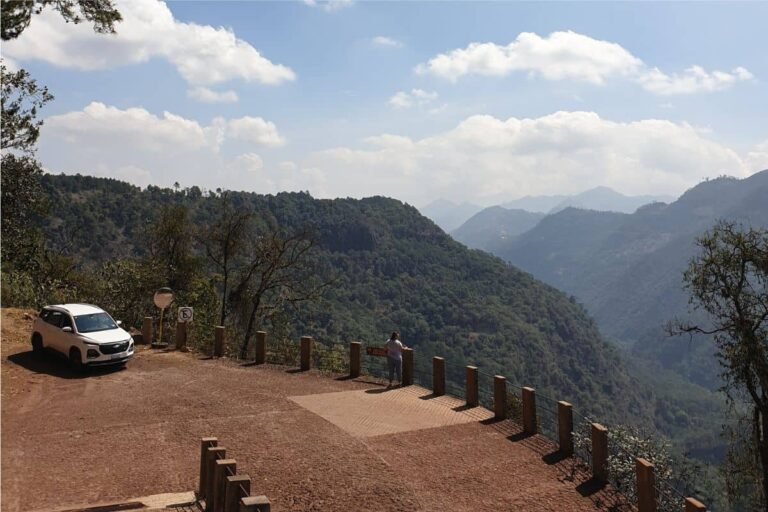
There are only two towns from that entire stretch where I can immediately connect the name to the place. Zacatlán de las Manzanas, up in the mountains surrounded by apple orchards, genuinely stays with me.
And Tlatlauquitepec, a name that took me almost the entire stay to pronounce even close to correctly, which had a quality of calm that the others didn’t.
The rest? Fragments. A particular street, a meal, a view from somewhere. But I couldn’t tell you which memory belongs to which town. Eight towns, and they’d blurred into one long composite of plazas, colonial streets, and photos of colourful buildings.
We’d seen everything. And experienced almost none of it.
The Cost We Hadn’t Factored In
We’d planned four days in Oaxaca before moving on. Seemed like plenty.
We arrived so mentally and physically drained that within the first day we knew four days wasn’t going to be nearly enough. We had the flexibility, so we extended to eight.

And honestly, we needed every single one of them just to feel like ourselves again.
That’s when it really landed. We’d spent years travelling under pressure, limited time, real money spent, a quiet obligation to make every trip worth it. And without even noticing, we’d carried that same pressure into a trip where we finally didn’t need to.
Why a Road Trip Doesn’t Automatically Mean Slow Travel
A road trip doesn’t slow you down. Let’s be honest about that.
What it gives you is the option to slow down. The possibility of it. But whether you actually do is entirely determined by the approach you bring to it.
If the planning habits come with you, and for most of us, they do, the road trip just becomes the same holiday with a different mode of transport.
The format isn’t the fix. The mindset is.
How We Actually Changed Things
From Oaxaca onwards, we approached the road trip more slowly. Not with a system or a framework, it was simpler than that. Just a quiet decision to stop approaching travel the way we always had, and find a new way that better suited our changing lifestyle.
One Step at a Time
We stopped locking everything in before we left. Instead of arriving somewhere with the next three stops already booked, we’d reserve a couple of nights at our current destination and wait.
Settle in, get a feel for the place, and only think about what came next when we were genuinely ready to leave.
Some places we stayed longer than planned. Some we left earlier. But we made those calls from inside the experience, not from a spreadsheet filled in months before departure, based on what we thought we might want.
That last part matters more than it sounds. What you actually want when you’re standing in a beautiful town on a Tuesday afternoon can be completely different from what you imagined on a grey evening at home, looking at travel photos.
Quieting the “Don’t Waste Time” Voice
The bigger shift was stopping the internal negotiation about making the trip efficient.
That little voice saying “what else can we fit in, are we making the most of this”, it was still there. We just stopped letting it be the decision maker. Instead of asking what else we could fit in, we started asking something much simpler: do we actually want to leave yet?
Sometimes the answer was yes. Quite often, it wasn’t.
Córdoba Proved the Point
When we did a road trip through Spain not long after Mexico, we leaned fully into this way of thinking, and the difference was immediately obvious.
We arrived in Córdoba having planned three nights. Reasonable on paper. But once we actually walked the old town and found our rhythm, we both knew three nights wasn’t enough. So we stayed five.
Those two extra days are some of the most specific, vivid memories from that entire trip. Not because we did more during them, actually the opposite. We went back to places we’d already visited, sat in the same café again, let the city become genuinely familiar rather than just seen.
That’s a different experience entirely from passing through somewhere on the way to the next stop.
One practical note before we move on. If you’re planning a road trip and you haven’t sorted your car rental yet, we always use Discover Cars.
We’ve tried a few of the big comparison sites over the years and this one has consistently given us the best rates and the least hassle, which matters more than you’d think when you’re trying to keep things flexible and low-stress. You can search available cars for your trip here.
The Question Worth Asking Before You Book Anything
These days we’ve stopped asking how much we can see on a trip, and started asking whether we’d actually remember any of it a month later.
Because those lead to two very different journeys.

You remember the places where you slowed down. The second visit to the same café. The afternoon with no particular plan. The town you stayed in longer than expected because it just felt right.
You don’t tend to remember stop number six in a loop of eight, and if you do, you probably can’t tell it apart from stop number five.
Mexico Wasn’t Going To Disappear
We had twelve days between Puebla and Oaxaca, and we rushed it anyway.
But here’s what we’ve understood since then: Mexico wasn’t going anywhere. Those towns weren’t going to disappear. Nothing was ever at risk of running out except our own willingness to slow down and actually be there.
Oaxaca was still there. The slower, quieter version of that trip was available to us the entire time. We just had to get out of our own way first.
If you’ve got a road trip coming up, you probably don’t need a better itinerary or more detailed research. You might just need to give yourself permission to stay a little longer, or just slow down.