How travelling Without Kids Changed How We See Travel

There’s a version of Kuala Lumpur that has lived large in my memory for over a decade. It’s warm and busy and glittering, and it smells of charcoal and satay.
In this version, I’m standing in a Chinatown food market at night, watching my daughter, Dana, and her three cousins stare in wide-eyed disbelief at a stall blazing with flames at one end and absolutely bristling with skewers at the other.
The smoke rises from the flames and carries with it the smell of charred meat and sweet peanut sauce, drifting down the street and pulling people in before they’ve even decided to stop.
Skewers filled with chicken, beef, pork. And then, just past that: turtle, crocodile, ostrich, duck, deer, seafood of various and ambiguous origin.

Dana, who has always been the more adventurous eater of the four, actually tried some of them. Her three cousins were enthusiastic, more so than their mother was prepared to allow, which produced its own kind of memory: that of teenage disappointment when an adult makes a decision on their behalf.
That trip to KL was one of three stops on a two-week Malaysia vacation, and it left a mark. Not just on me. On all of us, I think.
For more than a decade, Kuala Lumpur held a specific place in our minds as our favourite Asian city. So when we were planning a Vietnam trip in 2026 and flying Malaysian Airlines, stopping over in KL wasn’t a hard sell.
Part convenience, yes, but mostly deliberate. We wanted the food. We wanted to remember why KL had earned that favourite city title in the first place. Three days felt like enough to relight the flame.
It wasn’t quite the return we’d imagined.
Why Chinatown Felt Different the Second Time
We decided to base ourselves in our favourite area. Of course we did, and the Santa Grand Classic hotel could not have been any better located. Chinatown was where our best memories lived, so that’s where we wanted to be.

It seemed obvious at the time. Looking back, I’m not sure we really thought through what we were hoping for.

My memory of Chinatown was extraordinarily specific: stall after stall of grilled meat, flames licking upwards, skewers dipped in peanut sauce, a kind of organised chaos that made the whole street feel alive.
It was one of the main reasons I’d wanted to come back. If I’m honest, the satay was almost the entire reason.
What I found was something considerably more ordinary. The market was still there. But the food stalls had become harder to find, squeezed out by the kind of knock-off clothing and souvenir vendors you see in tourist markets the world over.
The exotic skewers were almost nowhere to be found. Good satay, the kind that had apparently been everywhere twelve years ago according to my very reliable memory, was proving nearly impossible to track down.
I mentioned this to Pauline with what I suspect was a level of disappointment disproportionate to the situation. She graciously pretended to be sympathetic.

I did eventually find one place with a decent selection. It was good, but not up to the high expectations I had arrived with.
It took me a few days after we left KL to work out what had actually happened. And it wasn’t just that the market had changed, though i’m sure it had. The real issue was something more interesting than that.
The Memory Wasn’t Really About the Place
Here’s the thing about travelling with kids that I don’t think you realise until they’re off on their own adventures.
When you’re watching a fourteen-year-old reach forward and try a piece of ostrich or deer on a skewer, you’re not just experiencing the food stall. You’re experiencing the food stall through their eyes as well.
The wonder on Dana’s face became part of my memory. Her cousins’ frustration at being told no, their mother’s arguably unreasonable caution, the way all four of them stood there in the heat of that charcoal smoke: that’s what I was actually remembering. The satay was almost incidental.
Well, maybe not incidental, it will take more than that to change my mind that grilled meat and spicy, sweet peanut sauce is one of the world’s great food combinations.
But none of that was there the second time. Obviously. Dana is an adult now, living her own life. The nephews are grown with kids of their own. Pauline and I were just two people in their sixties wandering through a market looking for grilled meat.
The place hadn’t necessarily failed us. We had changed what we were asking it to do.
I didn’t fully understand this at the time. It was only when I was sitting by a pool a few days later, trying to figure out what had felt flat about the visit, that it landed properly.
Maybe a significant part of what I’d loved about KL the first time wasn’t Kuala Lumpur. It was the shared experience with my family.
It was watching someone you love encounter something strange and exciting for the first time. You can’t go back to a city and find that waiting for you. It doesn’t live there.
The Day Pauline Made a Better Call Than I Did
We’d planned our first full day carefully. Temples in the morning, a coffee stop at somewhere well-reviewed, satay skewers for lunch (the hope still very much alive at this point), a walk through Chinatown and the Central Markets in the afternoon. The whole thing mapped out and timed.
By late morning, we were done.

Not done as in tired. Done as in: we had worked our way through the entire day’s plan before we’d even thought about lunch. When you have a list of places to see, it turns out, you tend to have a quick look at each one, tick it off, and move on. You’re not visiting so much as completing a to-do list. There’s a subtle but significant difference.
I checked my phone and told Pauline we’d essentially finished everything on the plan. Did she want me to look up more recommended places for the afternoon?
She looked at me for a moment, probably saw that sightseeing this way was boring me, and suggested we just start walking and see what we find.
She was right. I would never admit this to her, but she usually is, and to her credit she doesn’t make a habit of pointing that out.
I put the phone in my pocket and we just started moving. No destination, no next pin on the map. It felt different almost immediately, the mysterious potential of not having somewhere specific to be.
We slowed down. We looked up. We took a turn down a street simply because it looked interesting rather than because anything on it had been recommended.

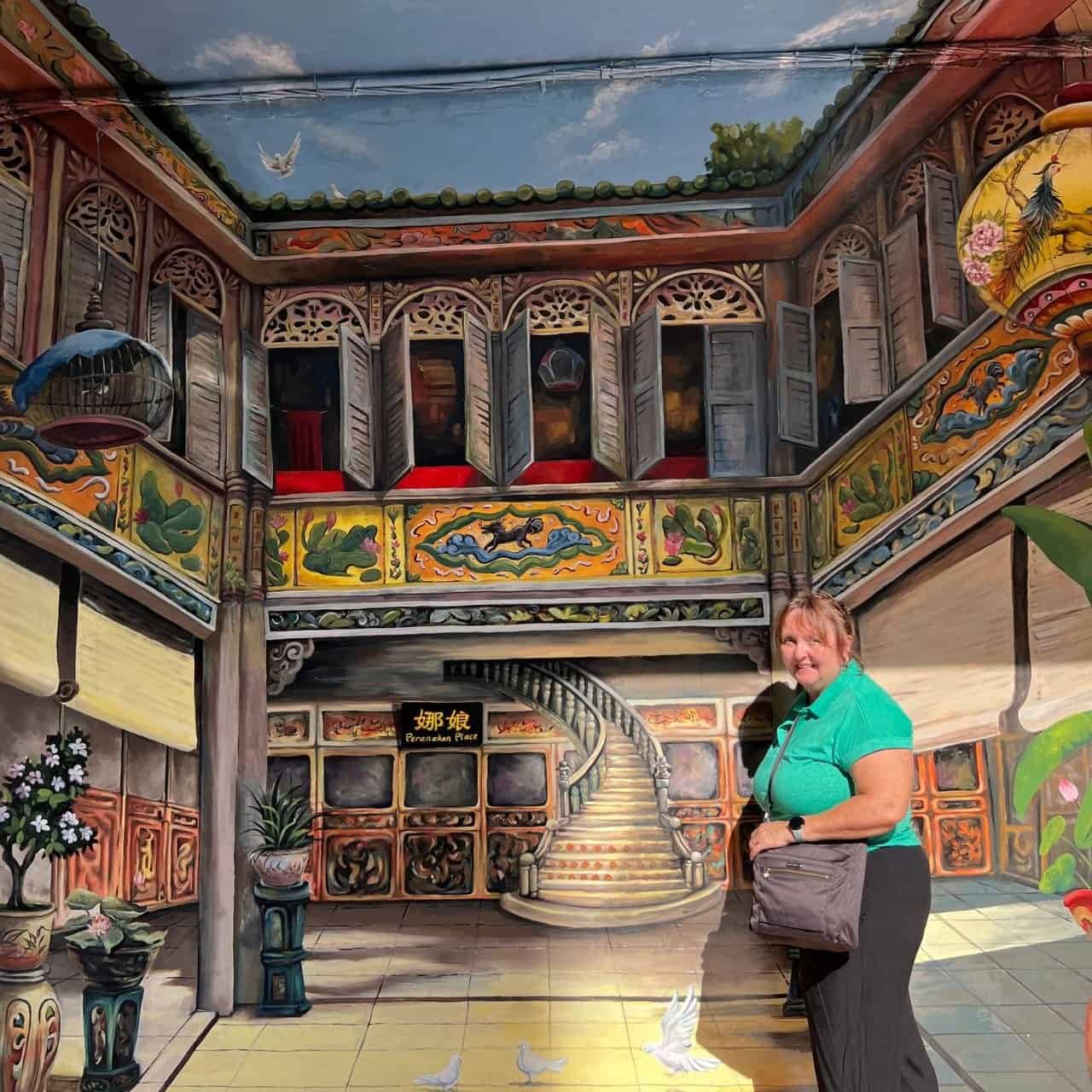
Once we stopped following the itinerary, something shifted. We found street art in alleys we would have walked straight past if we’d been heads-down in a plan.
Not the famous art lane that every travel guide mentions (which exists in a permanent state of Instagram gridlock), but quieter, less obvious spots we happened to notice out of the corner of our eye. The kind of thing you find when you’re not looking for anything in particular.
It wasn’t a revelation. It was a reminder of something we’d already learned but apparently needed to relearn: overplanning can mean you spend your day following someone else’s highlights instead of finding your own.
How We Used to Travel, and Why That Matters
When Dana was young, we planned everything. You have to. You’re travelling with a child who needs to be engaged, entertained, and reasonably well-fed at predictable intervals.
Every day needs something she’ll enjoy so she will at least allow us to see some things we would like but she may not. The itinerary is partly logistics and partly parenting.
As Dana got older, we were able to loosen up a bit. Longer in places we actually liked. A bit more flexibility. But the habit of planning, of mapping the day, of having the list, stayed with us. It was just what travelling looked like.
In the years since Dana started travelling without the need for us to accompany her, allowing us to completely rework our own travel style, we had been working on learning more about how we actually want to travel.
But for some reason we had forgotten this when it came to our return to KL. We slipped back into guided tourist mode, and quickly found out this had been a mistake.
We are, these days, what we call slow-ish travellers. A week or more in each place, usually. Enough time to find the cafe we actually like rather than the one with the most reviews.
Enough time to get bored and wander, without feeling like we’re wasting valuable vacation time. Enough time to recover between days, which matters more than we used to admit. The goal isn’t to see more. It’s to be somewhere, properly, for a while.
Our three days in KL were more like the old version of us. Fast, planned, site-focused. And while there’s nothing wrong with that approach (we did it for years and enjoyed it at the time), it just doesn’t fit us any more.
The phone check that revealed a fully completed day plan before noon was the moment I knew it.
What KL Actually Taught Us
Looking back, KL actually taught us two things, and I suspect they’ll sound familiar to anyone reading this who has experienced years of family travel and now moved into the next stage.
First Lesson
Some of your travel memories aren’t really about the place. They’re about who you were travelling with, and what it felt like to see the world through their excitement.
That isn’t a loss. It’s something to be grateful for. But it does mean you can’t always go back to a destination and expect the same magic, because the magic wasn’t entirely stored in the destination.
Second Lesson
The way you travelled as a family was right for that version of your life. It isn’t necessarily right for this one. The slower, more spontaneous, curiosity-led style that suits Pauline and me now would have been a disaster with Dana in tow.
But it’s what we’ve grown into, and KL reminded us, a little bluntly, that we’d been trying to use an old map.
Retirement travel isn’t just about having more time. It’s about giving yourself permission to travel differently. That same realisation has also changed how we think about our travel bucket list after 50.
Maybe the best thing about retirement travel isn’t having the freedom to go wherever you want. Maybe it’s finally having the freedom to travel however you want.
Have you revisited a destination you loved with your kids, only to find the second visit without them felt different? We’d love to know in the comments what you discovered.