Quy Nhon vs Bai Xep: Which Is Better for Your Vietnam Trip?

We booked Quy Nhon because almost everything we read described it as a quieter alternative to Nha Trang and Da Nang. It sounded like the sort of place we usually enjoy: a coastal city with fewer international tourists, a more local atmosphere, good food and a long beach sweeping around the bay.
In our minds, however, “quieter” gradually became “smaller.” By the time we arrived, we had imagined something closer to a relaxed beach town than the busy regional city waiting for us.
Our first walk along the waterfront quickly corrected that picture. Quy Nhon had tall hotels, busy roads, and a line of seafood restaurants stretching along the beach.
It did feel less touristy than Nha Trang or Da Nang, but it was not the sleepy coastal escape we had expected. It was a genuine Vietnamese city that happened to sit beside the sea.
Just to let you know, if you prefer to watch the movie rather than read the book, you can head over to YouTube:
That misunderstanding mattered because we had originally planned to spend our entire week there. While researching the area, we discovered Bai Xep, a tiny fishing village about 10 kilometres down the coast.
It looked beautiful, but also so small that I wondered whether we would become restless after a couple of days. The sensible plan seemed to be staying in Quy Nhon and visiting Bai Xep as a day trip.
In the end, we divided the week between them, spending four nights in Quy Nhon before moving to Bai Xep for three. It proved to be the right decision, although we would reverse the balance if we returned.
Quy Nhon gave us local restaurants, coffee shops, city life and a practical base for exploring the surrounding coastline. Bai Xep gave us clear water, quiet mornings and several days when we stopped wondering what we should do next.
They may be only 15 to 20 minutes apart, but staying in each felt like having two completely different trips.

Quy Nhon, Bai Xep or both?
| Selection | Quy Nhon | Bai Xep | Split your stay |
|---|---|---|---|
| Best for | Food, coffee, city exploration and regional day trips | Swimming, natural beauty and genuine downtime | Combining activity with relaxation |
| Atmosphere | Busy Vietnamese coastal city | Tiny fishing village | City energy followed by village calm |
| Beach experience | A long urban beach, although the shoreline did not appeal to us during our visit | A small cove with clear, inviting water | Explore the city first, then enjoy better beach time |
| Food choices | Plenty of restaurants, cafes and local seafood | A limited selection of village and hotel options | Enjoy variety without expecting Bai Xep to provide it |
| Activities | Few major attractions within the city, but a useful base for the wider region | Very little beyond the beach, village and surrounding scenery | Day trips followed by unstructured time |
| Main limitation | Busier and more developed than some visitors expect | Limited restaurants, activities and conveniences | Requires packing and changing accommodation |
| Our preferred stay | Three nights | Four nights | Seven nights in total |
If you have only three or four nights, Quy Nhon is the more practical base and Bai Xep can be visited for the day. If you have a full week, staying in both allows you to enjoy what each place does best without expecting either one to provide the entire experience.
What Quy Nhon is actually like
Quy Nhon sits on Vietnam’s central coast, roughly between the better-known cities of Nha Trang and Da Nang. It is often recommended to travellers looking for somewhere less internationally touristy, and that part of its reputation matched what we found.
Most of the holidaymakers we saw were Vietnamese families rather than overseas visitors. Their presence shaped the character of the city far more than any collection of organised attractions.

Late each afternoon, as the sun began to set, families poured onto the beach. Children played on the sand, groups gathered in the shallow waters and the waterfront steadily grew busier. As evening arrived, many crossed the road to the long line of seafood restaurants overlooking the bay.
The routine appeared wonderfully uncomplicated. The beach, seafood and time together were the vacation.
Quy Nhon does not have the same visible tourism focus as some of Vietnam’s better-known coastal cities. We encountered fewer places obviously designed for Western visitors, and menus sometimes required more interpretation than we were used to.
That occasionally involved a little guesswork, but it also made eating in the city more interesting.
We spent our days walking through the centre, finding coffee shops and trying local restaurants. One unexpected discovery was an excellent dim sum restaurant that became one of the food highlights of our entire Vietnam trip.

It was not what we had imagined when planning a week by the beach, but some of the best travel memories begin with finding something you were not looking for.
Once we stopped expecting Quy Nhon to be a sleepy beach town, we appreciated it more fairly. It was lively, predominantly Vietnamese and full of ordinary city life. That made it interesting to explore, even if it did not provide the quiet coastal atmosphere we had pictured.
Travellers who enjoy seeing how Vietnamese families spend their own vacations may find Quy Nhon more rewarding than someone arriving with a checklist of famous sights.
Using Quy Nhon as a base for the surrounding coast
Quy Nhon itself has a limited number of conventional tourist attractions. The city has beaches, markets, temples and the Cham Twin Towers near the centre, but most visitors will not need several days purely for urban sightseeing.
Its greater strength is as a base for exploring the wider Binh Dinh coastline.
Around the region are beaches, islands, fishing villages, sand dunes and historic Cham sites. Some of the most frequently mentioned excursions include:
- Ky Co Beach, approximately 25 kilometres from central Quy Nhon
- Eo Gio, known for its coastal cliffs and walking paths
- Hon Kho Island, commonly reached by boat from Nhon Hai fishing village
- Sand dunes and smaller beaches along the coast
- Traditional fishing villages
- Cham sites including the Twin Towers and several other tower complexes around Binh Dinh
The official Quy Nhon tourism website has current information about Ky Co and other attractions in the region. Vietnam Tourism also provides useful background on the Cham towers and Binh Dinh’s cultural heritage.
We did not visit every place on that list, so we cannot personally rank them or tell you which deserve priority. What became clear during our stay was that Quy Nhon makes the most sense when viewed as the centre of a broader coastal region rather than a city packed with famous attractions.
If you want to arrange several excursions, staying in Quy Nhon gives you easier access to transport and a much wider selection of restaurants when you return. It is the practical choice for travellers who enjoy having a destination or activity attached to each day.
The beach we had not expected
Our greatest disappointment in Quy Nhon was the beach.
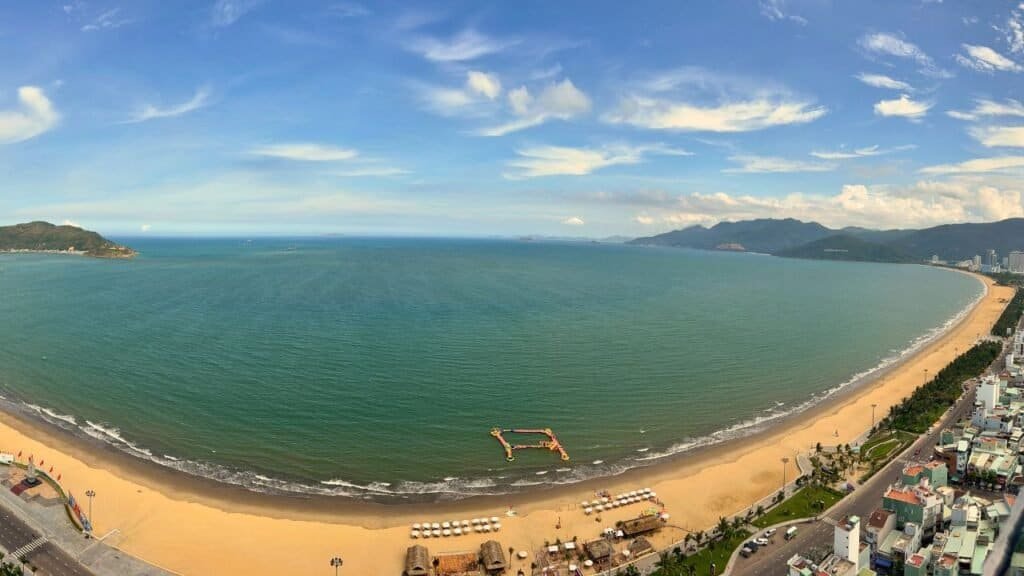
From a distance, it looked impressive. The sand formed a long curve around the city, and from the upper floors of our hotel we could see the coastline stretching away in both directions. It was exactly the kind of view that had helped convince us to spend a week there.
Closer to the water, our reaction was different. During our stay, the shoreline regularly had a noticeable brown tinge that made the water look uninviting to us.
We do not know what caused it, and we are not going to speculate. We can only describe what we observed at the time.
Plenty of local people felt differently. Every evening, we watched hundreds of families head onto the sand and into the water. Quy Nhon Beach was clearly popular and played an important part in the life of the city, but neither Pauline nor I felt tempted to swim there.
Conditions may be completely different at another time of year or even during another week. Our experience should not be treated as a permanent judgment on Quy Nhon Beach. Anyone choosing the city primarily for swimming should check recent photographs and reports before visiting.
For us, however, it changed the balance of the stay. We had expected Quy Nhon to combine city exploration with relaxing beach time. The city gave us interesting food, good coffee and plenty to observe, but the beach experience we wanted never arrived.
By our fourth day, we felt we had seen enough of the centre and were ready for a quieter pace. Fortunately, our next hotel was only a short drive away.
Where we stayed in Quy Nhon
We stayed at the five-star Grand Hyams Hotel Quy Nhon Beach.
Our ocean-view room on the 29th floor was enormous, with an uninterrupted view along the coast. The hotel also had a pool overlooking the beach, so the accommodation became one of the strongest parts of our Quy Nhon stay.

Its central location made it convenient for exploring the city and finding places to eat. More importantly, the elevated view allowed us to watch the character of the waterfront change throughout the day.
Vietnamese people generally avoid the sun, hoping not to darken their skin, so the beach could appear almost empty during the day before filling with families as sunset approached.
Sitting on our balcony while the city came alive below became part of our evening routine. We may not have wanted to swim at Quy Nhon Beach, but watching hundreds of people enjoy it gave us a memorable view of the city’s local vacation culture.
From city traffic to village lanes
The journey from Quy Nhon to Bai Xep took only about 20 minutes, which seemed a slightly ridiculous distance for changing hotels. We could easily have visited the village for the day and returned to the comfort and convenience of the city before dinner.
The difference became apparent as soon as we arrived.
Our taxi stopped at the entrance to a narrow lane and could go no farther. The driver unloaded our luggage, indicated the direction we needed to walk and waved goodbye, leaving us to drag our suitcases through the middle of the village.
The homes were built close to the lane, with barely enough room for an occasional motorbike to squeeze past. After four days of negotiating Quy Nhon traffic whenever we wanted to cross the road, sidestepping one or two motorbikes now counted as rush hour.
As we made our way deeper into the village, there was no grand entrance or resort driveway to announce the beach. The lane simply ended and the cove appeared in front of us.
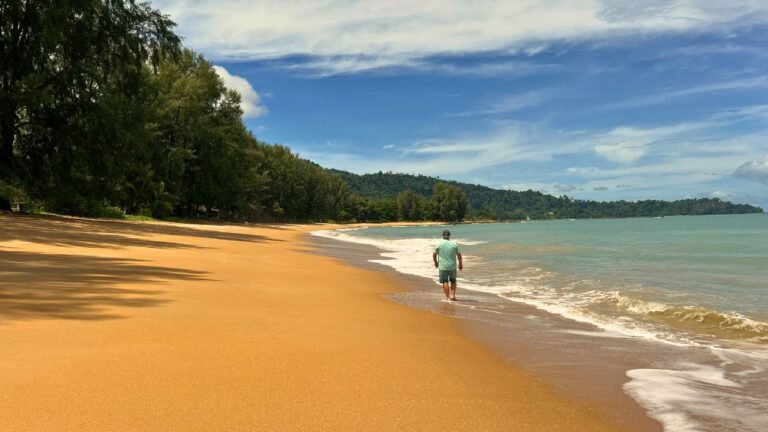
There was golden sand, a scattering of fishing boats and water clear enough to make us immediately want to swim. The traffic, wide roads and tall buildings of Quy Nhon had disappeared within the space of 20 minutes.
This was the coastal experience we had hoped to find when we first booked the city.

The strangest part was looking back across the bay and still being able to see Quy Nhon and our previous hotel. Geographically, we had barely travelled anywhere. Yet the pace, atmosphere and way we spent our days were about to change completely.
What Bai Xep is actually like
Bai Xep is a fishing village rather than a small beach resort, and travellers should arrive with that distinction in mind.
The village sits between two small bays. One is home to dozens of fishing boats, while the other has the swimming beach, a couple of hotels and a handful of restaurants. Narrow lanes and tightly packed local homes connect the two sides.
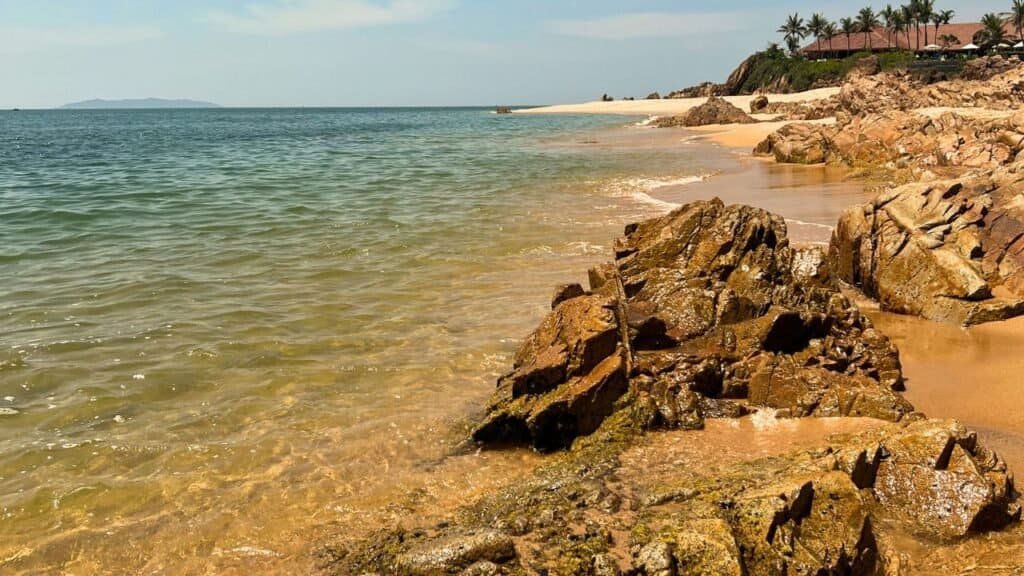
There is no extensive shopping area, no long strip of cafes, and nothing resembling an organised tourist attraction. Some accommodation cannot be reached directly by car, which is worth remembering if you are travelling with heavy luggage or have limited mobility.
It is close enough to the city to remain accessible, yet far enough away to feel like a separate destination.
The village had some of the relaxed atmosphere people might associate with an old-fashioned backpacker escape, but it did not feel dominated by young party travellers. We felt entirely comfortable there as more experienced travellers looking for somewhere simple, peaceful and beautiful.
Bai Xep’s appeal comes partly from what it does not have. There are few decisions to make because there are few choices competing for your attention. The beach and village provide the setting, and visitors need to be comfortable allowing that setting to fill the day.
For some people, that simplicity will feel wonderfully freeing. For others, it may begin to feel limiting after the first evening.
Finding a different daily rhythm
Our days in Bai Xep bore almost no resemblance to the previous four days in Quy Nhon.
I would wake early and walk along the beach while Pauline slept in. The village was quiet in the morning, and watching the sun rise over the water became reason enough to get out of bed.

After breakfast, we might walk along the beach together and have a swim before the day grew warmer.
There was no pressure to fit anything in before lunch because there was almost nothing to fit in. We would eat something light, spend time on our balcony overlooking the water and eventually wander down for another swim.
Later, the beachfront restaurants began arranging tables on the sand as local fishermen returned with the day’s catch.
That was about as demanding as the schedule became.
After several weeks of moving through Vietnam, making plans and regularly changing destinations, Bai Xep gave us permission to stop. It was not simply that we chose to do less. We gradually stopped feeling that we should be doing more.
In Quy Nhon, our days had been shaped by curiosity. We looked for another street to explore, another coffee shop to try or somewhere new to eat. Even while we were enjoying ourselves, there was an undercurrent of wondering what to do next.
By our second day in Bai Xep, that question had quietly stopped applying.

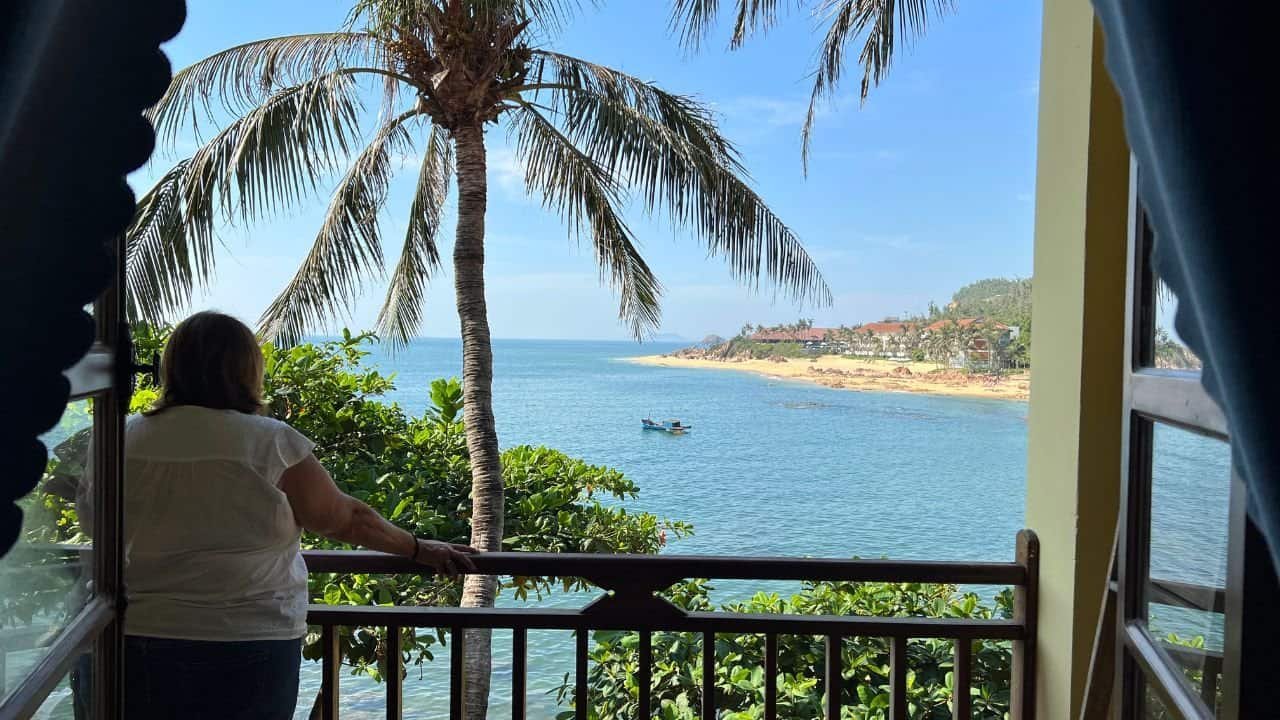
The contrast was clearest around sunset. From our balcony in Quy Nhon, we had watched hundreds of people heading into water that did not appeal to us. From our balcony in Bai Xep, we might see only ten people enjoying the sparkling cove below.
Both balconies gave us expansive coastal views. One showed us the energy of a Vietnamese city at the end of the day. The other gave us the beach stay we had been hoping to find.
Only one made us want to spend time in the water.
Where we stayed in Bai Xep
We stayed at Haven Boutique Hotel, right on the beach at the end of the village.
Haven is a three-star beachfront hotel, closer to a relaxed backpacker hotel than a conventional resort. Our private beach-view room was large and comfortable, with a balcony overlooking the bay.
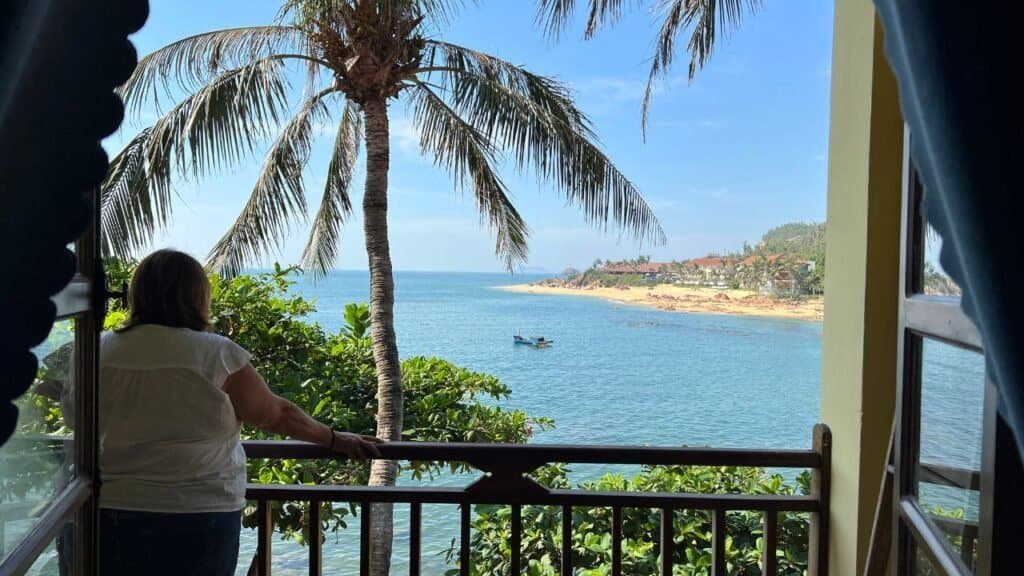
The attached Big Tree Bistro served our included breakfast as well as inexpensive lunch and dinner options. In a village with limited food choices, having a reliable restaurant at the hotel made the stay considerably easier.
Although we did end up eating twice at an amazing restaurant about 30 metres back along the lane, called Cá Gỗ – Làng Chài Bãi Xếp. We can’t say enough about the service and the food at this place and highly recommend that you visit.

The location contributed enormously to our experience. We could wake beside the water, walk directly onto the beach and retreat to our room during the hottest part of the day without leaving the view behind.
The balcony allowed us to enjoy Bai Xep even when we were doing little more than watching the boats move across the bay.
Would Bai Xep suit you?
Bai Xep was easily our favourite of the two places. On this occasion, Pauline and I agreed completely, which is not always guaranteed when two people travel together for weeks at a time.
That preference does not mean it will suit everyone.
The village has only a limited number of places to eat, and there is no long list of activities waiting to keep visitors entertained. Once you have walked through the village, spent time on the beach and watched the fishing boats come and go, you have experienced most of what Bai Xep physically offers.
It is likely to suit travellers who are happy with quiet mornings, unstructured afternoons and returning to the same restaurant more than once. It works for people who can enjoy the same beach on consecutive days without feeling they have failed to make proper use of their time.

It may be less suitable if you want a different restaurant every night, several activities to choose from, easy access to shops or a lively evening atmosphere. The lack of variety is not a flaw that better planning will solve. It is part of the place.
Bai Xep can also be visited easily from Quy Nhon. The journey takes approximately 15 to 20 minutes by taxi or rideshare, although vehicle access within the village can be less straightforward.
When we later booked a ride back into Quy Nhon, our driver needed some help finding the correct pickup point among the narrow lanes. But we got him to us eventually.
If you have only three or four nights in the area, staying in Quy Nhon and visiting Bai Xep for the day is a reasonable choice. You could walk through the village, spend several hours on the beach, have lunch and return to the city.
You would see most of Bai Xep’s physical attractions because there are not many to see. What you might miss is the experience that begins when visiting stops and staying takes over.
A day trip would have shown us the bay, the fishing boats and the clear water. It would probably have included a swim and lunch beside the beach. It would not have shown us what changed once we woke there for a second morning with nowhere else we needed to be.
A day trip can show you what a place looks like. Staying there can reveal how it feels.
How we would divide a week
We spent four nights in Quy Nhon followed by three nights in Bai Xep. If we returned, we would reverse that balance and stay for three nights in Quy Nhon followed by four nights in Bai Xep.
Three nights in the city would give us time to explore the centre, enjoy its restaurants and coffee shops, and include a regional excursion. Travellers wanting to visit several places around the coastline may prefer four or five nights, particularly if Ky Co, Eo Gio, Hon Kho and the Cham sites are all priorities.

Four nights in Bai Xep would provide three complete days in the village. That would be long enough for the pace to change and for Bai Xep to feel like somewhere we were staying rather than a brief beach stop, without expecting a tiny village to occupy us for an entire week.
We would keep Quy Nhon first. It suits the beginning of the stay, when we are still ready to explore, find restaurants and plan outings. Moving to Bai Xep afterwards allows the week to gradually wind down rather than sending us from quiet village lanes back into city traffic.
Packing, travelling between the two hotels and unpacking probably took about an hour in total. For us, that was a small price for the change in experience.
Quy Nhon or Bai Xep: Which should you choose?
Choose Quy Nhon if you enjoy exploring cities and want plenty of food, coffee and transport nearby. It is the more practical base for regional day trips and the stronger choice if you prefer variety, convenience and something different to do each day.
It also offers an interesting alternative to Vietnam’s more internationally focused coastal cities. Quy Nhon is not free of tourism, but much of its vacation atmosphere is shaped by Vietnamese families rather than overseas visitors.
Choose Bai Xep if the beach and natural setting are the main reasons for your visit. It is better suited to travellers who want quiet mornings, clear water and somewhere that does not demand a daily sightseeing plan.
Choose both if you have close to a week and want the activity of a coastal city followed by genuine downtime.
We preferred Bai Xep, but that does not make Quy Nhon the wrong choice. It gave us interesting food, city life and a perspective on how Vietnamese families enjoy their own beach vacations. It also made Bai Xep feel even more peaceful when we arrived.
What Bai Xep taught us
We nearly let convenience make the decision for us.
Because Bai Xep was close enough to visit for an afternoon, the obvious plan was to stay in the larger and more convenient city, spend a few hours at the village and consider it covered. On a map, moving accommodation for such a short distance looked unnecessary.
What the map could not show us was how differently the two stays would feel.
Quy Nhon gave us somewhere to explore. Bai Xep gave us somewhere to stop. Neither would have provided the same balance on its own, and a day trip would not have allowed Bai Xep to change the rhythm of our week.
If we had followed the most convenient plan, we would have seen the bay and missed the point of it entirely.