Travelling With Elderly Parents: How to Plan a Trip Everyone Can Enjoy

If you’re thinking about taking your parents on a trip, you’ve probably already had the two competing thoughts that come with it.
The lovely one: imagine the memories.
And the nervous one: what if it’s too much for them, what if it’s too much for me, and what if the whole thing turns into three weeks of quiet tension in confined space?
Both thoughts are reasonable. Travelling with an ageing parent is genuinely different to travelling with your partner or your mates, and pretending otherwise is how trips go sideways.
But different doesn’t mean impossible, and it definitely doesn’t mean you need to plan the trip as though your parents are made of glass.
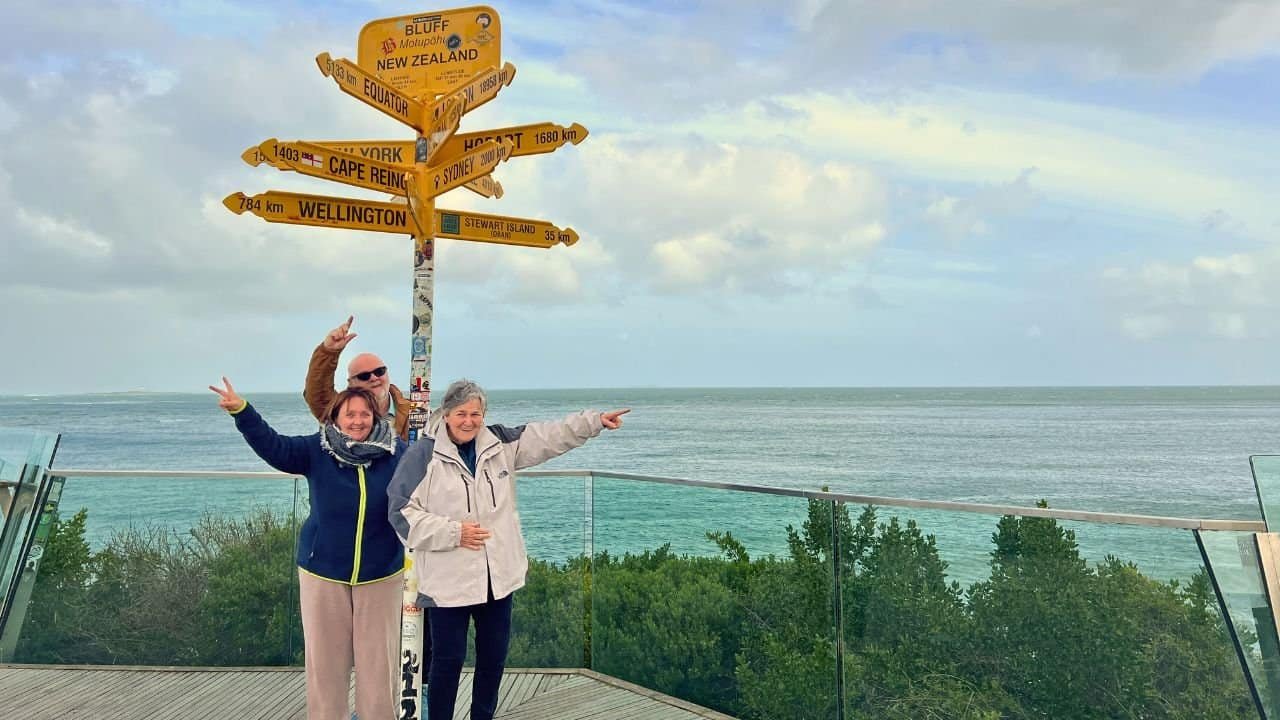
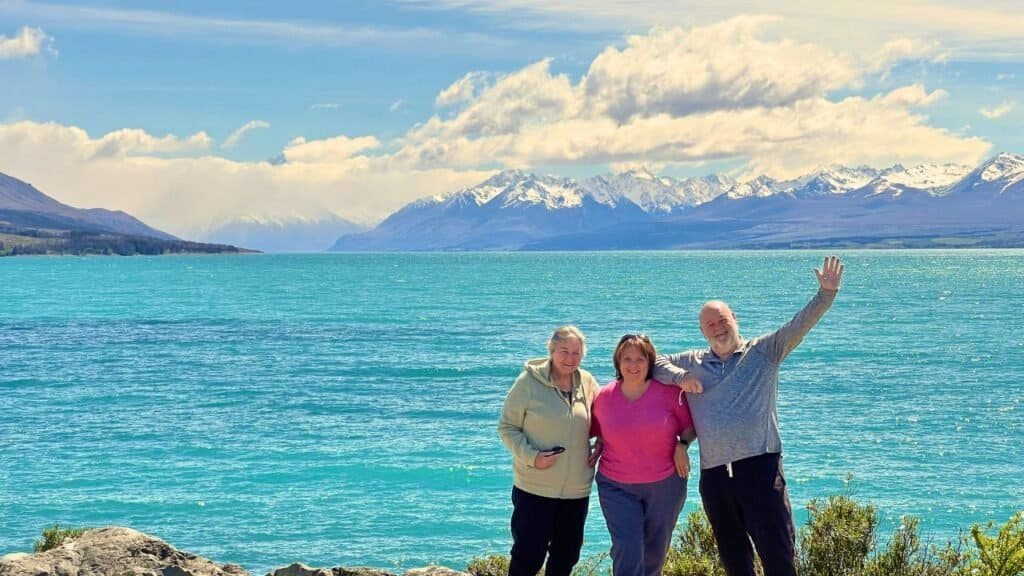
We recently took my mum on a three-week road trip around New Zealand’s South Island. She’s eighty, and it was her first trip overseas. So this isn’t theory, and it isn’t hindsight from years ago either. It’s fresh enough that we can tell you honestly what mattered and what surprised us.
But this article isn’t really about our trip. It’s about the questions worth asking before you plan one of your own, whether that’s a cruise, a guided tour, a resort stay, a visit to relatives, or three weeks in a rental car like we just had.
The goal here is simple: help you plan a trip that’s manageable and genuinely enjoyable, for your parent and for you.
Start With Whether This Is the Right Trip for Your Parents
Before you get anywhere near flights or itineraries, it’s worth sitting with a more basic question: do your parents actually want to do this, and does it suit who they are right now?
Age on its own tells you very little. It’s entirely possible for someone in their eighties to travel well, and just as possible for someone 20 years younger to find it exhausting.
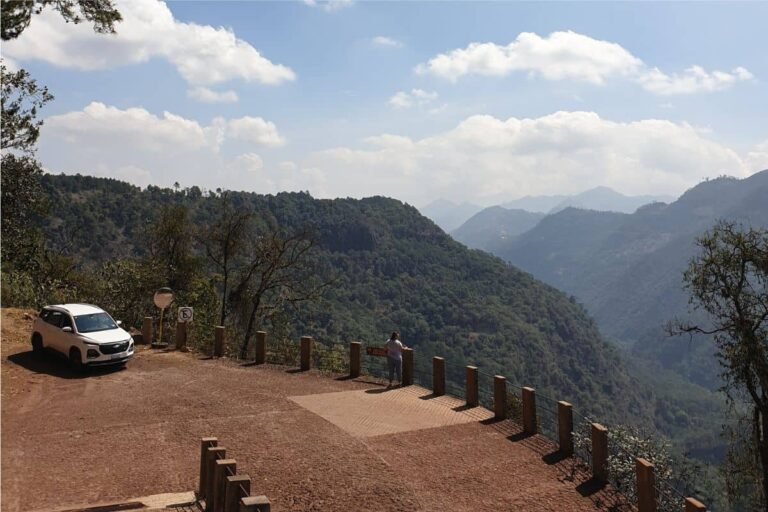
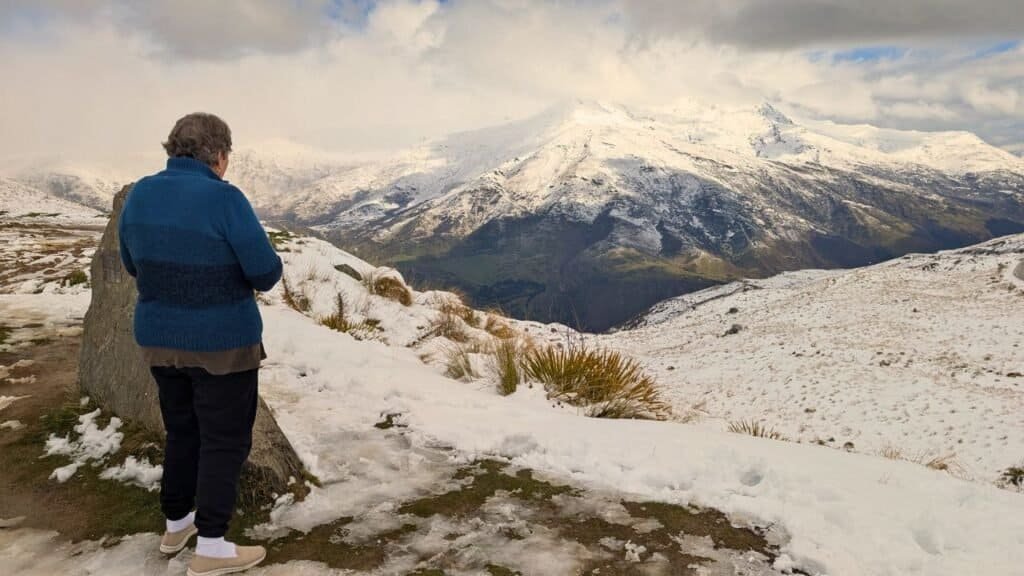
Before we left, Mum believed that a few hundred metres on flat ground was about her limit. Early in the trip she proved herself wrong, working her way up a dirt track to a lookout in cold, drizzly weather, on the understanding she’d turn back if it got too hard.
It was 500 metres each way, slightly uphill. She made it, and the view was worth it. Later in the trip she went further again, tackling a longer walk to a waterfall with around 80 stairs along the way, simply because she’d seen photos of it beforehand and wanted to see it in person.
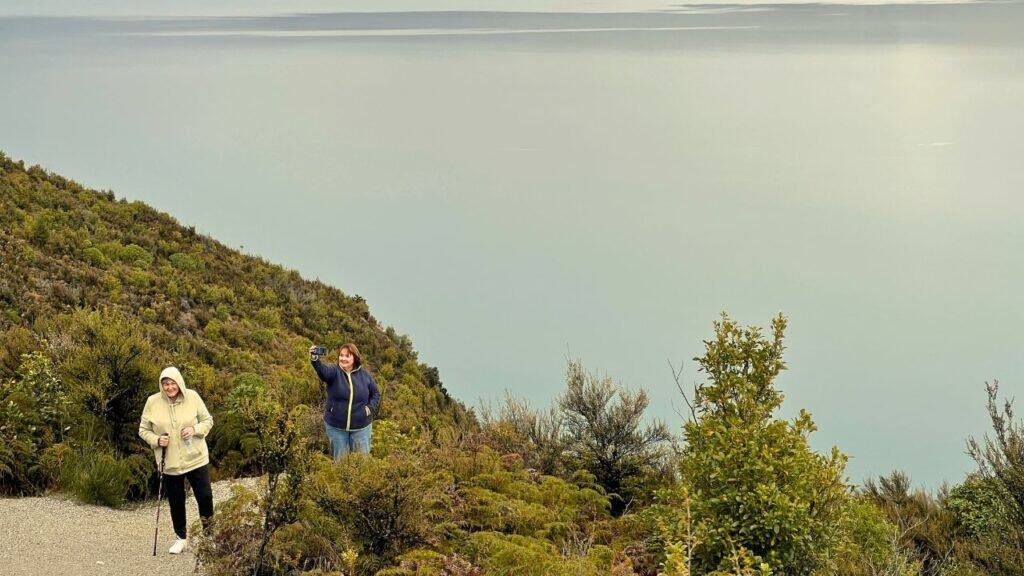
Both times she surprised us. The lesson wasn’t that she could do anything. It was that planning can identify likely limits, but capability, motivation and energy still vary from day to day, and the parent needs a genuine option to stop, turn back or sit something out without embarrassment.
So the first job isn’t picking a destination. It’s looking honestly at your parent as they are now, rather than as they were ten years ago. At the same time, don’t assume the limits they expect to have will necessarily prove accurate every day.
And don’t forget to ask them whether the kind of trip you’re imagining is one they’d actually enjoy.
Have the Conversations You’d Rather Skip
This is the part nobody enjoys, and it’s exactly why it needs to happen before you book anything.
Health, mobility, balance, hearing, eyesight, stamina, medication, dietary needs, and anything they might need help with. None of this is a fun conversation to start, especially with a parent who’s used to being the one asking you those questions, not the other way round.
The trick isn’t to interrogate them or make decisions on their behalf. It’s to talk with them, not about them, and to ask rather than assume. Some parents will tell you plenty without being asked. Others would rather talk about the weather, in which case you’ll need to be a bit more patient and a bit more direct, gently.
It’s also worth getting specific rather than general. Medication names and timing, not just “she’s on tablets.” Any dietary requirements written down somewhere accessible, not just remembered.
A basic idea of what they can manage in terms of stairs, walking distance and standing around, since those things rarely come up naturally in conversation until you’re standing at the bottom of a staircase working it out in real time.
Plan the Trip Together, Not Around Them
There’s a version of this that goes wrong quietly. The adult children plan the whole trip, decide the pace, book the accommodation, choose the activities, and then present it to the parent as a finished product.
It’s well-meaning, but it can still manage to leave the parents feeling like passengers in their own holiday.
We made a point of asking Mum what she actually wanted from the trip rather than assuming, and one thing that came up was starting later in the day. She’s never been an early riser, and rather than our usual crack of dawn starts, we shifted to mid-morning, after tea and toast and a proper chat about the weather.
It cost us nothing, and it made the whole trip more pleasant for everyone, which is usually how these small concessions work out.
Mum’s also a keen gardener, and we knew it. When she spotted the botanic gardens in Queenstown and the lavender fields at Wanaka, we stopped both times and let her wander at her own pace.

Pauline enjoyed them well enough, I mostly stood around waiting, and if Mum hadn’t been with us we probably wouldn’t have visited either. It’s a small example of a bigger rule: everyone gets a genuine turn choosing what the day includes, without anyone else grumbling about it.
Ask what they actually want. Pace, activities, meals, budget, sleep, what time they like to start the day, how much time together versus time apart. Your parents should be helping shape the trip, not being slotted into one that’s already been decided.
Why Managing Well at Home Doesn’t Tell You Everything
If your parent manages perfectly well living alone, cooking their own meals and getting to appointments, it’s tempting to assume travel will be fine too.
Not necessarily. Independence at home is often built on familiarity. The same chair, the same bathroom, the same short walk to the same shops, the same routine that doesn’t ask much of them because they’ve done it ten thousand times.
Travel removes almost all of that in one go. Airports, crowds, noise, unfamiliar bathrooms, different food, disrupted sleep, new time zones, and a stream of small decisions that never usually need making.
None of this means travel is a bad idea. It just means that coping well at home isn’t a reliable predictor of how someone will cope on the road, and it’s worth planning as though the trip itself is more demanding than ordinary life, because it usually is.
Choose a Style of Travel That Fits, Not One That Sounds Easier
Cruises, guided tours, independent travel, resort stays, city breaks, road trips, longer stays in one place. Each one asks something different of a traveller, and it’s worth resisting the assumption that slower automatically means easier.
Picture a long, relaxed stay booked in a single spot because it sounds gentler than a packed itinerary, and then picture that spot turning out to be a steep hill town with limited transport options and a ten-minute walk to anywhere useful.
That kind of mismatch can end up more physically demanding than an organised tour with a driver, a set schedule and someone else handling the logistics. The style of travel that looks easiest on paper isn’t always the one that is.
The real question isn’t which style of travel is objectively the easiest. It’s which one suits your parents, and which one suits the rest of you as well.
Look at the Whole Trip, Not Just the Big Days
It’s tempting to plan around the headline moments. The flight, the big excursion, the day at the famous site. But a trip is made up of dozens of smaller demands that rarely get much thought until they’re happening in real time.
Getting from home to the airport. The airport itself, and how far you actually have to walk once you’re inside it. Whether wheelchair or mobility assistance is available at transport hubs if it’s ever needed, even as a backup.
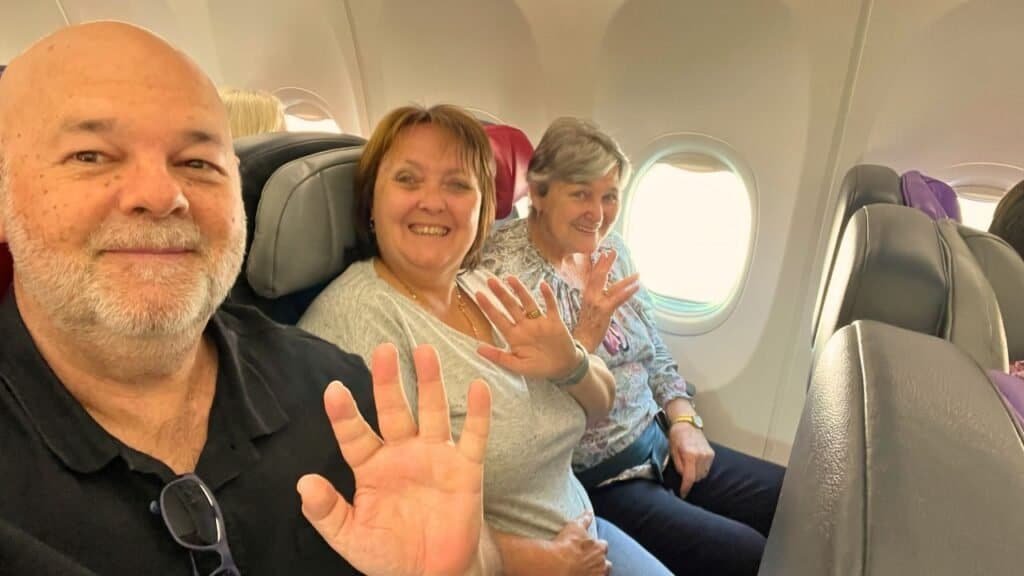
Transfers, luggage, and whether your parents can manage their own bags or whether that job quietly becomes yours. Boarding an aircraft, a train, a coach, a ferry or a ship.
Getting into the accommodation once you’ve arrived, including stairs, lifts and how workable the bathroom actually is. Meals and dietary needs. Whether a planned excursion involves steps, uneven ground or a lot of standing around waiting. Then doing the whole thing again on the way home.
Any one of those on its own is usually manageable. It’s the accumulation across a full day, or a full week, that quietly wears people down. We found that booking accommodation with few or no stairs and a proper walk-in shower made more difference to Mum’s day-to-day comfort than any single excursion did.
Planning for the whole experience, not just the marquee activity, is where a lot of the real comfort gets built in.
Build In Recovery, Not Just Activity
Long journeys, poor sleep, heat, cold, crowds and several active days in a row all add up. They can add up quickly for someone whose stamina or recovery time isn’t what it once was, and that has more to do with the individual than with a number on a birth certificate.
This doesn’t mean every day needs to be quiet. It means the itinerary needs somewhere for that fatigue to go. Keep some activities optional rather than compulsory, and treat them that way in practice, not just on paper.
Late on a long day heading toward Dunedin, we’d planned to see the castle there, something Pauline and I both fancied but had never treated as a must-do. By the time we arrived it was obvious Mum had had enough for the day.
We skipped it and went straight to the accommodation instead. Nobody was disappointed, because nobody had built the day around it in the first place.
Build in genuine downtime, not just gaps between bookings, and favour flexible arrangements over rigid, fully locked schedules, so there’s room to change the plan when someone’s had enough.
Protect Their Dignity and Their Choices
This might be the single most important thing in this whole article, and it’s easy to get wrong without meaning to.
Ask what kind of help they actually want, rather than deciding for them. Talk to your parent directly about their own needs, not to your sibling or your partner while your parent sits there. Let them make real choices, even small ones, rather than quietly making every decision for them because it’s faster.
One thing worth agreeing on before you go is a simple, discreet way for your parent to signal they need a break or some help, without having to announce it to everyone around.
A quiet word or a small phrase does more for someone’s comfort than you’d think, because it means they can ask without feeling like they’re holding the group up or making a fuss.
Sort Out Who’s Actually Doing What
Somebody needs to handle the bookings, the documents, the luggage, the medication details, and the decisions when plans change. Often that job lands on whoever’s naturally the organiser, and it lands there by default rather than by agreement.
That’s usually me. Driver, organiser and chief luggage handler, even when it’s just Pauline and me travelling. Adding Mum to this trip didn’t change who carried those jobs, it just meant more people to plan around while doing them.
Recognising that early meant I could pace my own energy for it too, rather than being surprised partway through the trip.
Discuss this before you leave, especially if there are several relatives or partners involved. Otherwise it’s easy for one person to end up as the de facto organiser, driver, luggage handler and carer for everyone else, without anyone actually deciding that’s how it would work.
That’s not fair on the person carrying it, and it’s not a comfortable position for the parents to watch happening either.
Keep essential medical information and medication details somewhere accessible to more than one person, not just tucked away in whoever’s bag happens to be handiest.
A brief, unhurried conversation about phones and contact helps too, so everyone knows how to reach each other and who to call if something needs sorting out.
Plan Sensibly for Things Going Wrong
Nobody wants to spend the lead-up to a trip thinking about worst cases, but a little groundwork here pays off if you ever need it. Get professional medical advice where it is needed.
Check that your parent has suitable travel insurance and has declared any pre-existing conditions as required.
Keep an accessible list of medications and prescriptions, along with basic medical information and emergency contacts. Make sure any mobility, hearing or vision aids are organised well before departure.
Have a loose sense, too, of what happens if your parent needs to return home earlier than planned while others continue travelling. You don’t need a detailed contingency document. You just need to have thought about it once, calmly, before you’re trying to work it out for the first time under pressure.
Let People Enjoy the Trip Differently
Travelling together doesn’t have to mean doing everything together, and some of the best trips build in room for both.
Late in the trip, staying near the water outside Queenstown, Pauline and I were heading out on a walk along the shore. Mum decided to stay behind, read her book, and watch the water from the balcony instead.
The previous few days had caught up with her, and there was no drama in saying so. We went, she rested, and everyone had a good afternoon in their own way.
Separate rooms where it makes sense. The odd afternoon apart, doing different things. Letting your parents rest without treating it as a group emergency, and letting the rest of you get on with your own version of a good day without feeling guilty about it.
You’re not trying to force everyone into the same experience of every single day. You’re trying to build a trip that gives each person a version of the day that actually suits them, with enough shared moments that it still feels like a trip you took together.
The Point of the Trip
It’s worth remembering, somewhere in the middle of all this planning, what the trip is actually for. It’s not to see how much your parent can still manage. It’s not to prove anything, to them or to yourself. It’s to give them a trip they can genuinely take part in, enjoy and remember well.
For Mum, this was her first time seeing anywhere outside Australia, at eighty. There’s a particular kind of wonder that comes with that, one we hadn’t quite anticipated and won’t forget.
There’s something special sitting underneath all of this, which is that these opportunities don’t stay available forever. That’s worth acknowledging honestly, without turning it into pressure or guilt.
The best reason to plan it properly isn’t fear of running out of time. It’s to give everyone the best chance of enjoying the trip and returning home with memories worth keeping. That’s reason enough on its own.