How to Make Travel Planning Feel Less Overwhelming

Too often there seems to come a point while planning some trips when the initial excitement fades and it starts to feel like a chore. You’ve probably experienced the moment yourself.
You sat down to look at a few possibilities, perhaps with only the vaguest idea of where you wanted to go, then watched a few YouTube videos and discovered somewhere else that looked incredible.
Some travel blogs added even more possibilities. And to top it off, everyone in the Facebook group you follow mentions a different little town that was apparently the highlight of their entire trip.
So you opened another tab. Then another.
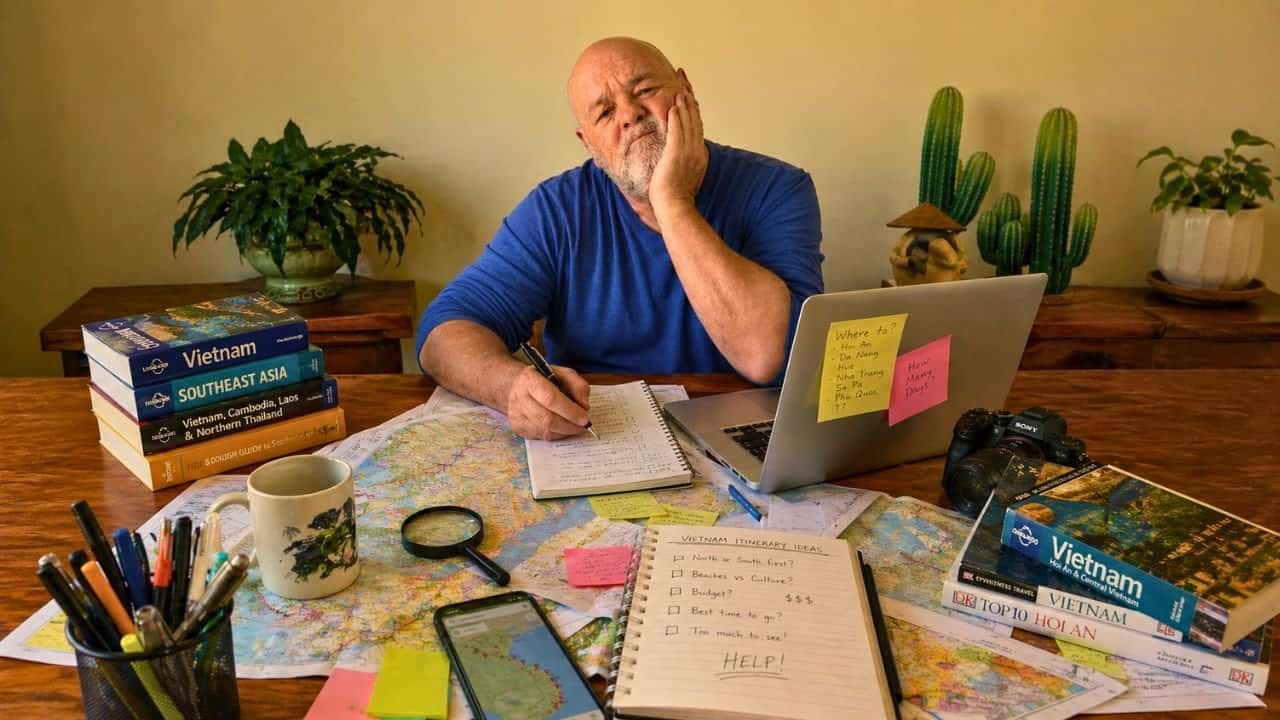
Before long there are pins scattered all over a map, hotel pages open for places you haven’t even decided to visit, and three completely different versions of the itinerary scribbled down somewhere. Instead of getting closer to making a decision, every hour of research seems to create another five.
A little while ago, we asked our YouTube community which part of planning a vacation they found hardest. It was only a small poll, but the result caught my attention.
More people chose planning an itinerary than deciding where to go, working out the budget, or even agreeing with their partner about where and when to travel.
That made perfect sense to me. Narrowing down your destination is one decision. Putting together a longer trip means trying to make dozens of decisions work together.
Where should you go? How long should you spend there? What should come next? Are you moving too quickly? Is there somewhere else nearby you should visit while you’re there? Then the internet helpfully throws another 400 possibilities at you.
The problem isn’t that we don’t have enough information to plan a good trip. We have too much.

Planning has become much easier for us over the years, but not because we’ve discovered a magic formula or finally learned how to construct the perfect itinerary.
We’ve simply accumulated a lot of little lessons about ourselves. We know more about how quickly we like to travel, the places where we tend to settle easily, how much variety we enjoy, and when we’re likely to want a few quieter days. We know there are places where we’ll happily stay for weeks and others where a couple of days is enough.
Those lessons act as filters, and that’s the idea behind the way we now plan. Instead of starting with hundreds of possibilities and continually adding more, we try to make decisions in an order that gradually removes them. By the time we’re seriously deciding where to go, we’re no longer choosing from everywhere.
And it isn’t because we’re smarter than everyone else, we don’t use any secret travel agent tricks. Everything we do that simplifies our planning can work just as easily for you.
Before planning the next trip, think about the last one
This is probably the simplest change we’ve made, and it happens before we open a map or start looking at flights. We think about where we’ve just been. Not simply whether we liked Vietnam, Spain, or Mexico. That’s useful, but there are better questions.
What did that trip teach you about the way you like to travel? Perhaps you came home from three weeks in Europe delighted by everything you’d seen but absolutely exhausted by changing hotels every third night.
Maybe a week at a beach resort taught you that you need to keep busier than you thought. Perhaps you booked every day in advance and loved knowing exactly what was happening, or you discovered that your favourite day was the one when you abandoned the plans completely and just wandered.
Think about the places where you wished you had another week. Then think about somewhere you were quietly ready to leave a little earlier. What was it that made you feel this way?
None of this tells you where your next vacation should be, and that’s the beauty of it. You haven’t opened Google Maps. You haven’t checked an airfare. You might not even have decided which country you’re visiting. But you’ve already started eliminating possibilities.
If your last trip taught you that changing hotels every two nights drove you mad, you’re probably not going to build the next one around eight stops in sixteen days.
If you discovered how much you enjoyed having a few completely unplanned days, you know not to fill every square on the calendar this time. And if you loved being able to walk out of your hotel and explore without needing a car, that becomes useful information when you’re comparing places later.
You’ve made the trip easier to plan before you’ve technically started planning it. And you should already be feeling less overwhelmed.
I think this is one reason experienced travelers often appear to be better at planning. Not that they’re necessarily brilliant planners. They’ve simply collected more information about themselves.
Every trip has left behind little lessons, and after enough years, they stop considering hundreds of options that experience has already told them probably won’t suit. You don’t have to wait decades to do that. You can start paying attention now.
Work out what you’re looking for before deciding where to find it
There’s another lesson I carried over from my years working as a travel agent. People naturally assume the first question you ask someone planning a vacation is “where do you want to go?”
Sometimes that’s exactly the right question. If you’ve dreamed of visiting Japan for twenty years, Japan is probably going to be involved in this conversation.
But if you don’t already have that clarity, “where do you want to go?” can be a terrible question. Japan sounds good. So does Italy. Vietnam would be interesting. Your friends loved Portugal. And before you know it you’re back where you started, only now with four countries to research.

Sometimes my travel agent colleagues would ask clients questions that didn’t seem to have much to do with choosing a destination at all. Something like…
“Imagine you’ve arrived at your destination. It’s your first morning. You wake up, walk over to the window and pull back the curtains. What’s outside?”
“Do you see the ocean? A sleepy village? A busy city, alive with traffic and organised chaos? Mountains? Rainforest?”
Notice I never asked what country you’re in.
Or try this one…
“When you imagine packing for the trip, which shoes go into the suitcase first? Walking shoes? Hiking boots? Sandals? Dress shoes?”
We’re not really interested in the shoes. We’re trying to uncover the style of vacation you’re already imagining.
What I find slightly embarrassing is that it took me years to realise that questions like these that I used to help other people narrow down their choices were exactly the questions I should have been asking myself and Pauline, but didn’t.
They don’t give you a destination. They give you something more useful at this stage, a picture of what you want your trip to look and feel like.
Combine that picture with what previous trips have taught you and the enormous blank map starts shrinking. Not because you’ve discovered that dozens of places aren’t worth visiting. They just aren’t right for this trip.
There’s an important difference.
Give the things that matter the space they deserve
Once you have a clearer picture of the trip style, then start talking seriously about destinations.
We begin with the non-negotiables.
These are the places or experiences that would leave you coming home thinking “that place made this trip special,” or, if you’d missed them, “why on earth did we go all that way and not do that?”
On a first trip to Europe, perhaps Paris and London are non-negotiable. On a Southwest USA road trip, maybe you can’t imagine coming home without seeing the Grand Canyon, Monument Valley, and Arches National Park.
For our recent Southeast Asia trip, one of the clearest things we knew was that we wanted a proper stay in Hoi An. We’d visited before, so this wasn’t about racing back to see a famous attraction we’d missed.
We wanted something different this time. We wanted enough time to settle. Hoi An matched the trip we’d already begun imagining before we got anywhere near the detailed itinerary. We could picture those beautiful old streets in the morning. More importantly, we could picture ourselves having nowhere we needed to rush off to.
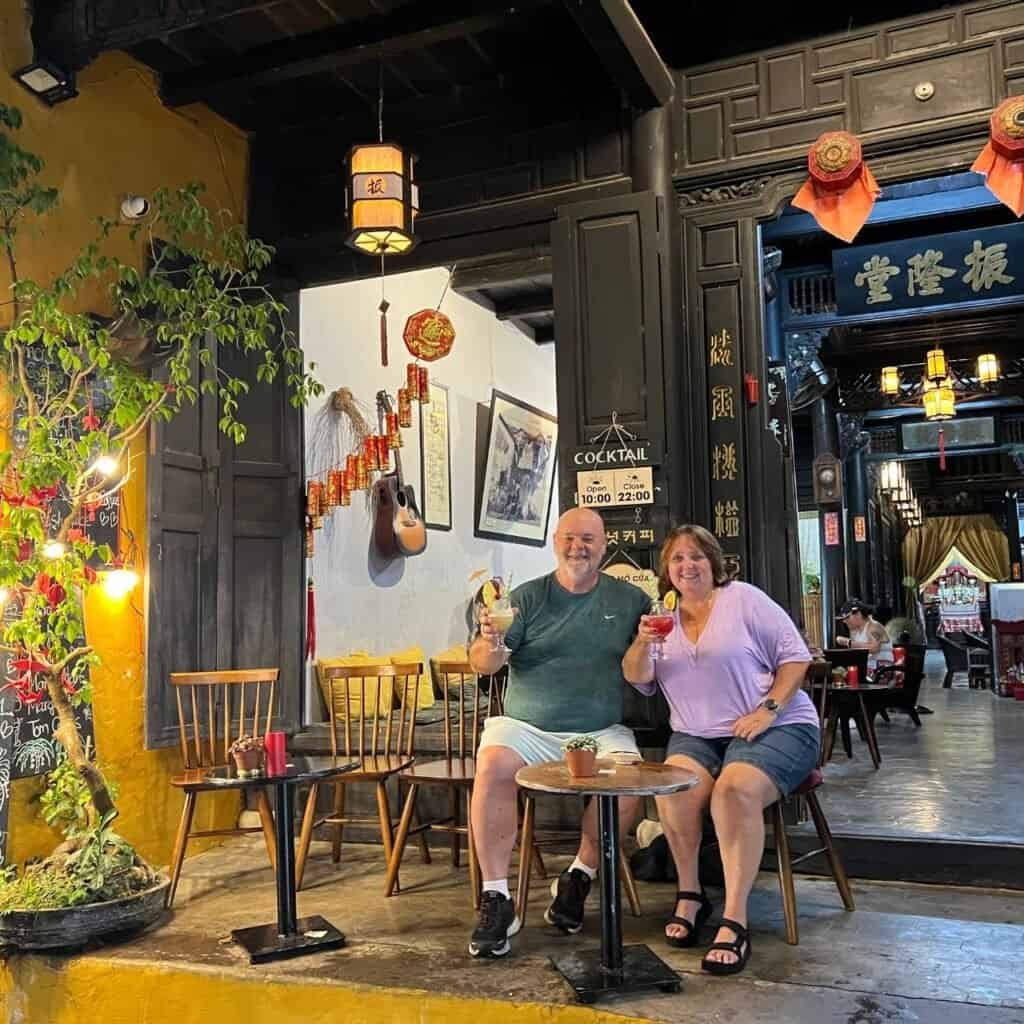
So we gave it two weeks. That’s a lot of itinerary real estate on a trip where we could easily have found another two or three destinations to occupy those fourteen nights.
But once we arrived, a routine began forming almost by itself. We stopped feeling as though every day needed to justify its existence with another attraction. There was always tomorrow.
By the end of the two weeks, we weren’t desperate to pack up and move on. We were wondering whether we could spend a month there next time. That’s now another lesson we’ve collected.
The lesson isn’t that everyone should spend two weeks in Hoi An. You might be climbing the walls after four days, you may have no interest in Vietnam at all. It’s that the parts of a trip that matter most to you deserve enough time to properly experience them.
For years, I had a tendency to divide trips almost evenly. Three nights here, three nights there, three more somewhere else. It worked OK back in the day, it’s easy to plan. It’s also rather arbitrary.
Why should somewhere you’re incredibly excited about receive the same amount of time as a place you’re mainly visiting because it’s conveniently on the way?
Once you stop treating every destination equally, something else happens. The pace of the trip starts emerging. Perhaps one place gets ten nights, another gets four, and somewhere else only needs two. There’s no perfect pace hiding in this article.
Some people genuinely love moving every couple of days. Others are happiest unpacking for two weeks or more. The useful question is simply whether the pace fits the trip you’re trying to create.
Again, we’ve reduced the number of decisions. We aren’t asking “how can we fit everything in?” We’re asking “does this fit or earn a place in the plan?”
Let the trip take shape rather than forcing it into place
Only after those important pieces are taking shape do we become seriously interested in flights and the broader logistics. This is another area where I’ve changed my thinking.
When I worked in travel, I could spend hours trying to find the perfect flights to match an itinerary that had already been decided. I’d have the route I wanted, then become frustrated because the airlines apparently hadn’t consulted me before creating their schedules.
These days I’m more interested in a different question. What flights give us the best combination of price and convenience, and what opportunities does that create?
On our Southeast Asia trip, we knew we wanted to spend most of our time in Vietnam. One of the better flight options was actually with Malaysia Airlines. The price worked, the connections worked, but unsurprisingly those connections involved Kuala Lumpur.
We could have treated KL as an inconvenience to try and remove. Instead, we remembered how much we’d enjoyed the city when we’d visited years earlier. So why not choose those flights and stay for a while?
Suddenly the flight wasn’t interfering with the itinerary. It was suggesting something. Returning to Kuala Lumpur after twelve years became part of the trip, and ultimately taught us something completely different about how our travel has changed over that time.

Good logistics don’t have to ruin the trip you wanted. Sometimes they reveal a better version of it. That doesn’t mean choosing a cheap flight and then obediently building your vacation wherever the airline deposits you.
There will be times when the place that matters is worth the awkward connection or extra cost. The point is to remain open to the relationship between the trip you want and the practicalities of making it happen.
By now you should have something that looks vaguely like an itinerary. A few important places are anchored. You have a sense of the pace. Perhaps your major flights are beginning to suggest how everything might connect.
This is where one of the most useful questions in the whole process comes in. Don’t ask where else should we go. Ask what experiences feel like they’re missing.
Look at the trip you’ve built so far. Does it already contain four big cities? Perhaps another city isn’t what you need. Would a few days beside the ocean change the rhythm? A mountain town? Somewhere smaller? Do you have two weeks of sightseeing and realize that what sounds wonderful right now is four days when you don’t feel compelled to see anything?
That’s how places such as Quy Nhon, Bai Xep, and Da Lat entered our Vietnam itinerary. They weren’t selected because we’d found another list of must-see destinations and dutifully worked our way down it. They each added something different. That’s when an itinerary begins to feel like a trip rather than a collection of pins on a map.
The destinations have roles. One might be somewhere you’ve dreamed about visiting for years. Another gives you a completely different environment. One might provide five wonderfully busy sightseeing days and the next gives you room to slow down. The destinations begin serving the trip. Not the other way around.
Learn to recognise when the trip has enough
Unfortunately, the internet won’t recognise this moment for you. It will happily keep going if you let it.
You can have a wonderful four-week itinerary sitting in front of you, and YouTube will still find another place you apparently can’t miss. Instagram will produce a hidden gem. Google will show you a beautiful town only three hours out of the way.
There is no little notification that appears saying congratulations, your trip is finished, you can now stop researching destinations.
So eventually you have to do it yourself. When another hidden gem catches your attention, ask whether adding it will actually make the trip better, or whether it will just make the itinerary busier. There’s a subtle difference between something being exciting and something belonging on this particular trip.
This is where knowing yourself becomes useful again. We’d rather come home thinking we probably could have squeezed in one more stop, rather than wishing we had spent those extra couple of days in that place we really went to see?
Someone else may feel differently, and that’s exactly the point. Travel planning gets easier when you stop trying to build an itinerary that would impress everyone and start building one that suits the person or people actually taking it.
Book the trip without locking yourself to it
Until this point, much of the itinerary can still exist on paper. Once we’re happy with the overall shape, we start turning it into actual bookings. We often begin with accommodation that matters most, particularly when we can secure it with good cancellation conditions. Then we’ll lock in the important flights and fill in the remaining accommodation and details.
But I wouldn’t turn that into a rule. The useful principle is flexibility, because things change.
Our Southeast Asia trip was originally going to start in Cambodia. A month after we had booked them, some flights were cancelled. By that stage we’d already put a lot of thought into how everything connected. Cambodia wasn’t an idea we’d casually written in the margin. It was part of the trip we could already picture ourselves taking.
Our first reaction could easily have been to fight to preserve it. Find some other flights that would still get us there no matter how inconvenient or expensive.
Instead, because we’d kept most of the affected bookings refundable, we had room to rethink that part of the itinerary without losing money. Cambodia came out. Other places went in.
And something slightly unexpected happened. We didn’t feel as though the trip had been ruined. We looked at it as a chance to try and improve the itinerary.
That’s a very different emotional response to a plan changing, and it comes back to one of the most useful things travel has taught us: don’t fall in love with the itinerary, fall in love with the style of trip you’re trying to create.
An itinerary is just your current best attempt to make that trip happen. If circumstances change and there’s now a better way to create it, let the itinerary change too.
The trips that don’t quite work may teach you the most
And then, of course, there’s the one variable nobody can solve from home. Reality. You can research a destination for weeks, watch videos, read blogs, study neighbourhoods, find the perfect hotel, then arrive and think, “oh, this isn’t what I was expecting.”
Nha Trang was a little like that for us. Before our recent trip, it looked like somewhere we’d happily spend a week. There was no glaring reason not to. We’d done the research, liked what we’d seen, and put it into the itinerary. Then we arrived.

After a couple of days, we both knew. It was okay. It just wasn’t really our kind of place. It felt too touristy, and yes, I see the irony since we are tourists as well. But that doesn’t mean we want to be part of a swarm.
It felt different to the places we’d been enjoying, and we never developed that feeling we’d had in Hoi An where staying longer seemed increasingly appealing. We didn’t need another week. If anything, we’d learned that the week we’d allowed was probably more than we needed.
Was that bad planning? I don’t think so. We’d done the research and genuinely thought Nha Trang would suit us. Sometimes the only way to discover how you feel about a place is to stand there. If you never go, you’ll never know.
Even though we didn’t love our time in Nha Trang, it has given us something useful. Not another rule saying don’t visit touristy places, that would be far too simplistic.
It’s given us another clue about ourselves. Why did Hoi An make us want to stay for a month while Nha Trang didn’t? What were we responding to in one that we didn’t find in the other? What does that tell us when we’re considering another coastal destination next year?
Those questions make the experience useful long after the trip has finished.
And that’s really where this whole way of planning circles back to the beginning. The next time you sit down to plan a vacation, you won’t quite be the same traveller who planned the last one. You’ll know something you didn’t know before.
Perhaps you’ve learned that three nights isn’t nearly enough in places you love. Perhaps you’ve discovered you enjoy having a routine. Maybe you’ve realised that driving gives you a freedom you don’t want to give up, or that hiring a car for three weeks was more trouble than it was worth.
Maybe you’ve simply learned that somewhere you expected to love left you cold. Instead of writing that off as a bad choice, think about why your research gave you a different impression.
Perhaps next time you’ll pay less attention to lists of attractions and more attention to how a place actually feels, who it tends to appeal to, or whether it offers the kind of experience you’re looking for.
They’re all useful, because every one becomes another filter. The world doesn’t get smaller. There will always be another destination, another recommendation, and another browser tab waiting to be opened. But the number of possibilities that genuinely suit the trip you’re trying to create does get smaller.
And that’s why I don’t think experienced travellers necessarily become better at planning because they know more. I think it’s because they’ve made the effort to know more about themselves, and how they want to travel.
So when you’re staring at a blank map wondering where on earth to begin, perhaps don’t start with the map at all. Start with what your previous trips have taught you.
Think about the trip you actually want to take. Then make each decision narrow the possibilities for the next one. You may be surprised how quickly planning starts to feel less overwhelming.